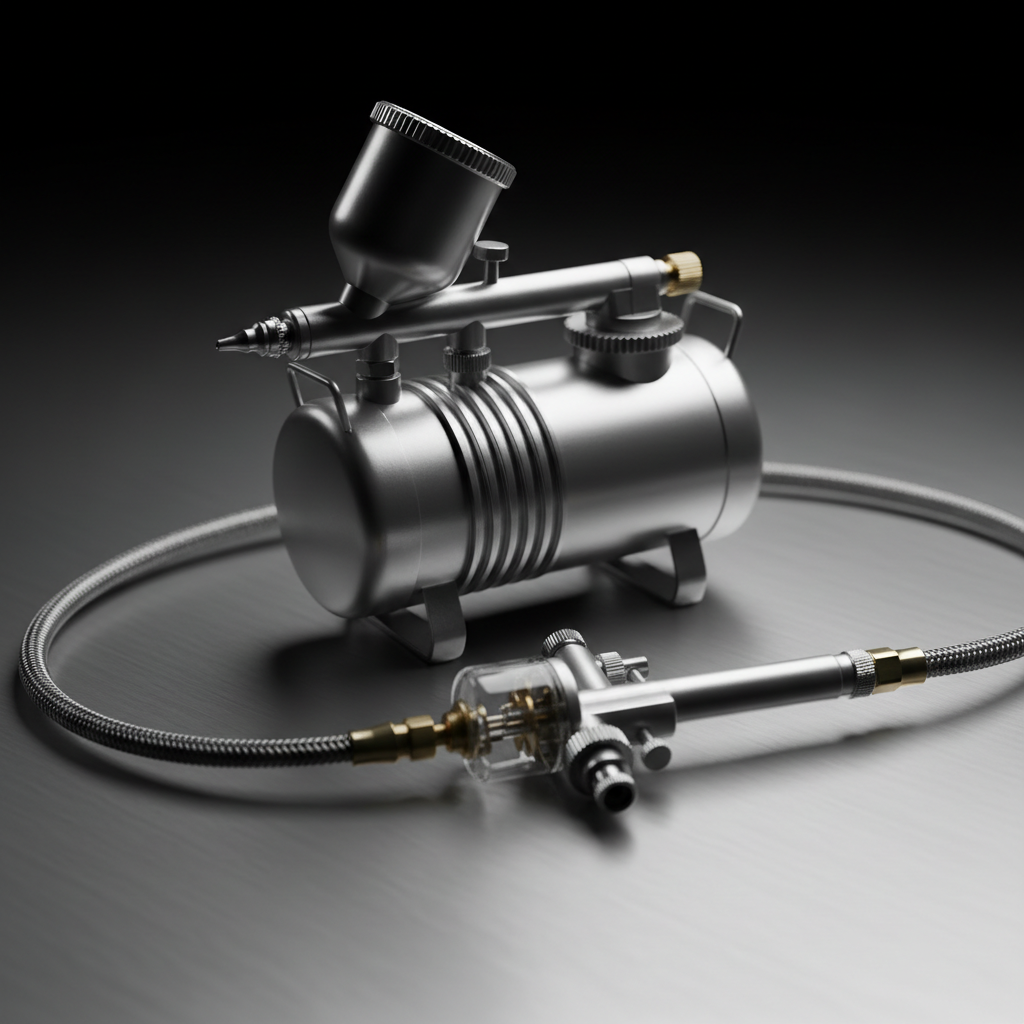
How to Choose an
Airbrush Compressor
The compressor is the part most beginners get wrong. Don't let noise, pressure spikes, or mismatched fittings interrupt your creative flow. Find the perfect match for your workspace.
The One Question That Actually Matters
Whether you're setting up a compact desk in an apartment or a dedicated hobby room, the right airbrush compressor makes the whole setup feel effortless. Most guides skip the most important factor: what kind of space are you working in?
This guide covers the two main compressor types, the specs that actually matter, and what to watch out for when buying your first unit.
Tank or Tankless: Which Is Right for You?
Tankless (Direct-Drive)
Compact and lightweight—fits easily on a desk. The motor runs continuously, creating a constant hum and slight pressure pulses.
Ideal Use Case
For hobbyists with very limited desk space or a tight budget.
Tank Compressors (with Reservoir)
The motor cycles on to fill the tank, then goes quiet while you work. Delivers steady, pulse-free pressure. Essential for fine detail blending and long-term consistency.
Ideal Use Case
For serious painters and apartment dwellers who need quiet intervals.
The 4 Specs That Actually Matter
You don't need to be an engineer. You just need to verify these four technical standards before clicking 'Buy'.
Working Pressure (PSI)
Most miniature work happens between 15–30 PSI. Ensure your compressor has an adjustable regulator.
Essential for ControlAuto Shut-off
Standard on tank units, this stops the motor once max pressure is reached, creating quiet intervals.
For a Quieter WorkspaceWater/Moisture Trap
Compressed air contains moisture. A trap prevents water from spitting through your airbrush.
Prevents Ruined ModelsSingle vs. Dual Piston
Single-piston is common and quiet. Dual-piston units move more air and stay cooler during marathons.
For High-Volume PaintingFittings, Hoses, and Making Connections
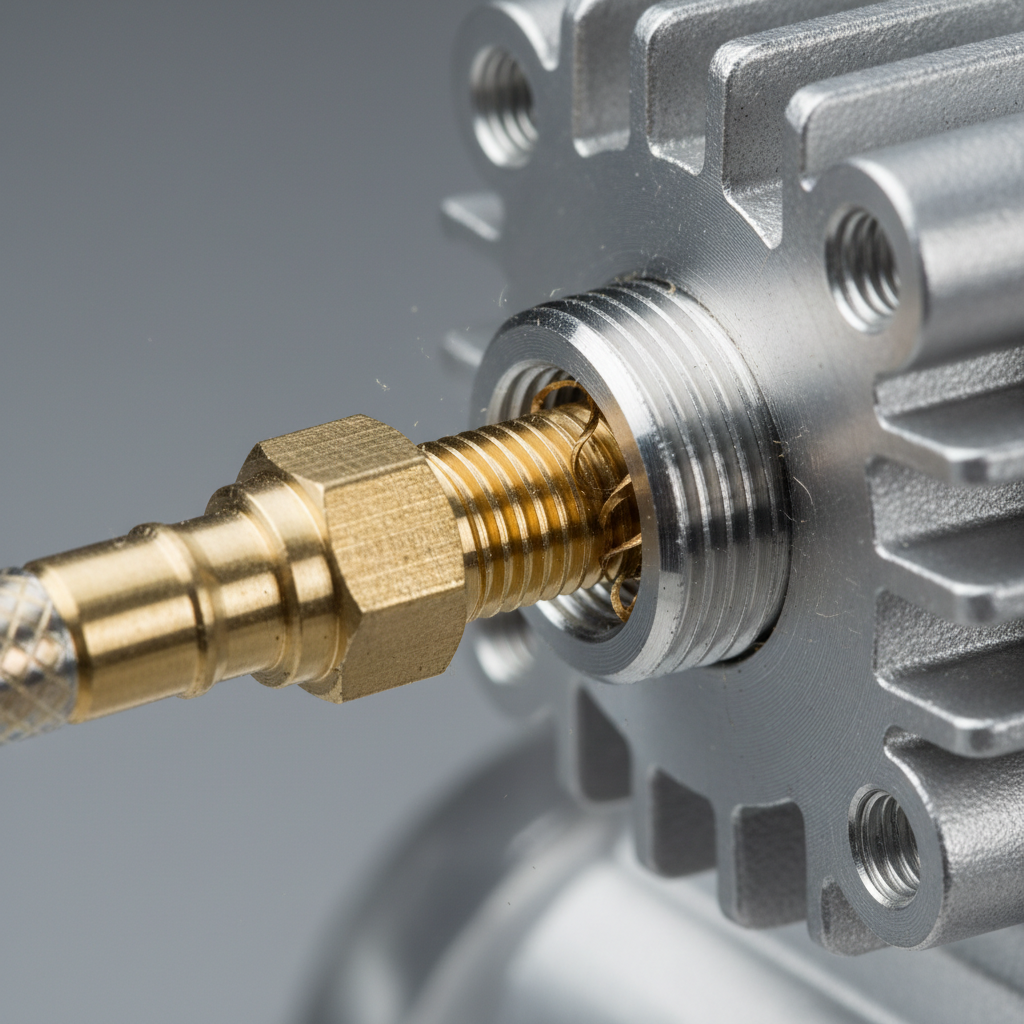
Compressors and airbrushes connect via a braided hose. The two most common standards are 1/8" BSP and 1/4" BSP. Before you buy, check your thread sizes. Most budget compressors use 1/8" BSP. If they don't match, a simple brass adapter solves the problem.
Popular brushes like the Badger Patriot 105 work with most hobby compressors out of the box.
Noise and Space: Real-World Factors
In an apartment or shared house, noise is the deciding factor. Tankless units hum constantly, while tank units run in quiet bursts.
Nearly Silent
Rare at this price range but ideal if quiet is your top priority.
Quiet Conversation
The hobby standard. Workable for most apartments and shared rooms.
Noticeable Hum
Best for garages or dedicated hobby rooms where sound isn't an issue.
Pro Tip: Mechanical Dampening
Place your compressor on a rubber mat or folded towel to absorb vibration.
What to Expect at Every Price Point
Transparent market analysis for hobby-grade equipment.
- Small tank units
- Moisture traps included
- Adjustable regulators
- Dual-piston/Larger tanks
- Quieter sustained use
- Longer duty cycles
Prices change frequently. Confirm current prices on Amazon, eBay, or your preferred retailer before buying.
Everything Else You Need
Tools and calculators to master your airbrush workflow.
Frequently Asked Questions
Can I use a regular shop compressor?
You can, but they are noisy and bulky. Hobby-grade compressors are specifically designed for the 15–30 PSI range and are much quieter for home use.
What PSI should I run?
15–20 PSI for thin paint and fine detail; 20–30 PSI for primers and base coats.
Is a tank worth the extra cost?
Yes. Most painters who upgrade to a tank compressor never go back due to the consistent pressure and quiet operation.
What size tank do I need?
A 1–3 liter tank is perfect for most hobbyists.
Ready to build your perfect airbrushing station?
Expert advice to help you buy right the first time. Check out our full guide on airbrush recommendations.
Shop Miniature Painting Supplies