What da Vinci brushes actually are
da Vinci is a German brush manufacturer whose history goes back to 1890. The company builds artist brushes for watercolor, acrylic, and oil painting, plus hobby, craft, and specialty brushes, so "da Vinci brushes" is not one product. It is a catalog that spans fine detail rounds, soft wash brushes, stiffer brushes for heavy paint, and general-purpose craft tools.
That range is the source of most of the confusion. Two listings with the same brand name can behave completely differently depending on the hair, the series, and the size. The useful question is not whether da Vinci makes quality brushes. It is which series fits what you plan to paint.
Series names and numbers carry the real meaning, so write down the exact series and size before you shop. Retailer pages often show only part of the name, and two pages that both say "da Vinci" can be selling brushes built for entirely different mediums.
Natural or synthetic hair: the first real choice
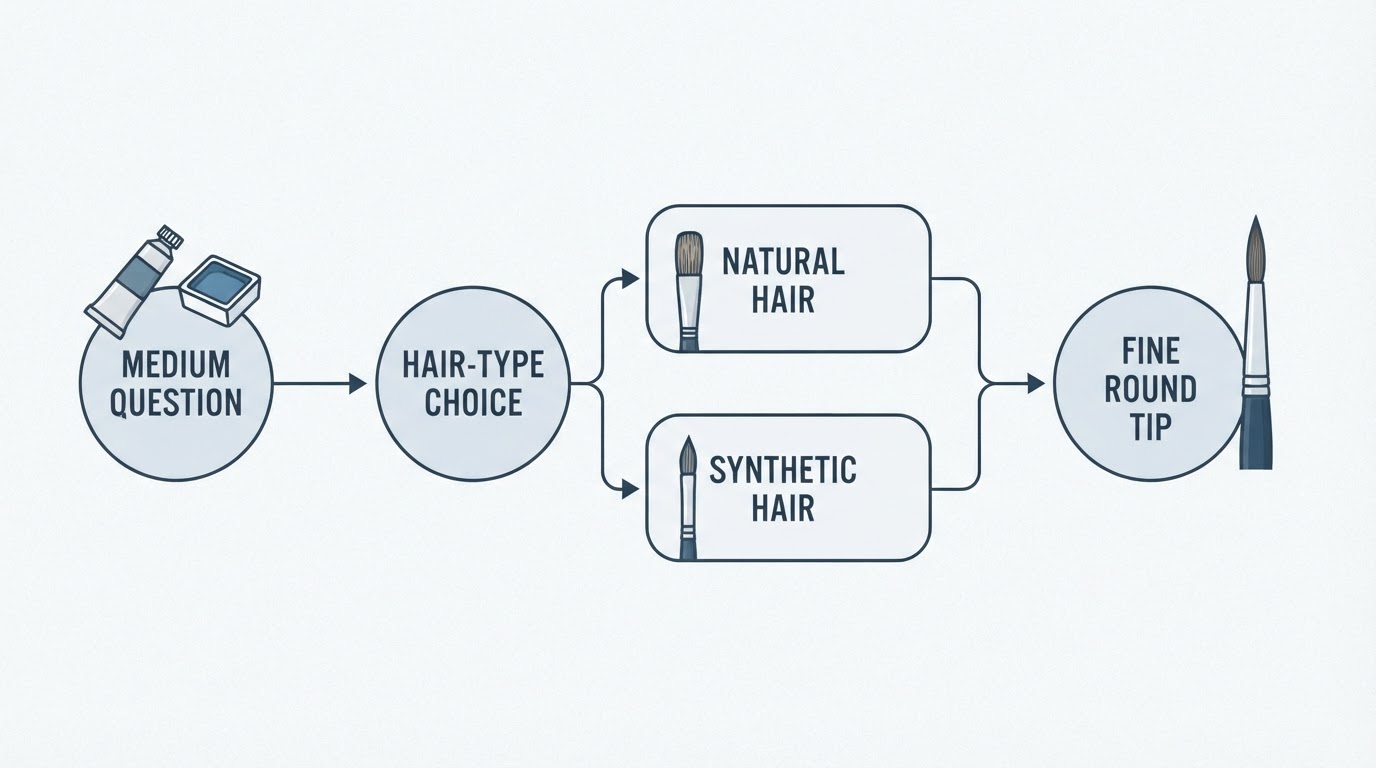
Most buying decisions come down to this trade-off.
Natural hair, including sable, kolinsky, squirrel, and similar fibers, tends to hold more water, release it smoothly, and keep a fine point. That is why it suits watercolor and fine detail work. The trade-offs are price and care: natural hair costs more, and it loses its shape if paint or solvent dries in the ferrule.
Synthetic hair is springy, durable, and cheaper. It stands up well to the repeated washing that acrylic painting demands. Its trade-offs run the other way: it usually holds less water than natural hair, and some synthetic tips gradually lose their shape, so check the point when the brush arrives and again after your first few sessions.
The common beginner mistake is starting with the most expensive natural-hair brush in the store. A mid-priced brush that matches your medium will teach you more than a premium brush you are afraid to use. Save the premium hair for the medium where it pays off, and check the series description before buying, because the hair type is not always obvious from the brand name alone.
Watercolor, acrylic, or oil: match the series to your paint
Series are usually designed around one medium.
- Watercolor series favor softness and water retention. They are built to carry a wet wash and then come back to a point.
- Acrylic series favor spring and durability, because acrylic dries quickly and hardens, so the bristles need to survive frequent rinsing.
- Oil series favor brushes stiff enough to move heavy paint, with softer options for blending and detail. Cleanup often involves solvent, which is hard on natural hair if the bristles are left to soak.
The practical warning is simple: do not assume a watercolor brush can be pressed into service with acrylics or oils, even if it looks similar. Dried acrylic in the ferrule is one of the fastest ways to splay a fine point, and prolonged solvent exposure can damage natural bristles. If you paint more than one medium, keep the brushes separate and store them that way.
When a listing does not state the medium, the series designation is what tells you. Check it against the manufacturer's own product information before you buy, and do not rely on a marketplace title alone.
Sizes for miniature detail
For miniatures, the point matters more than the number on the handle.
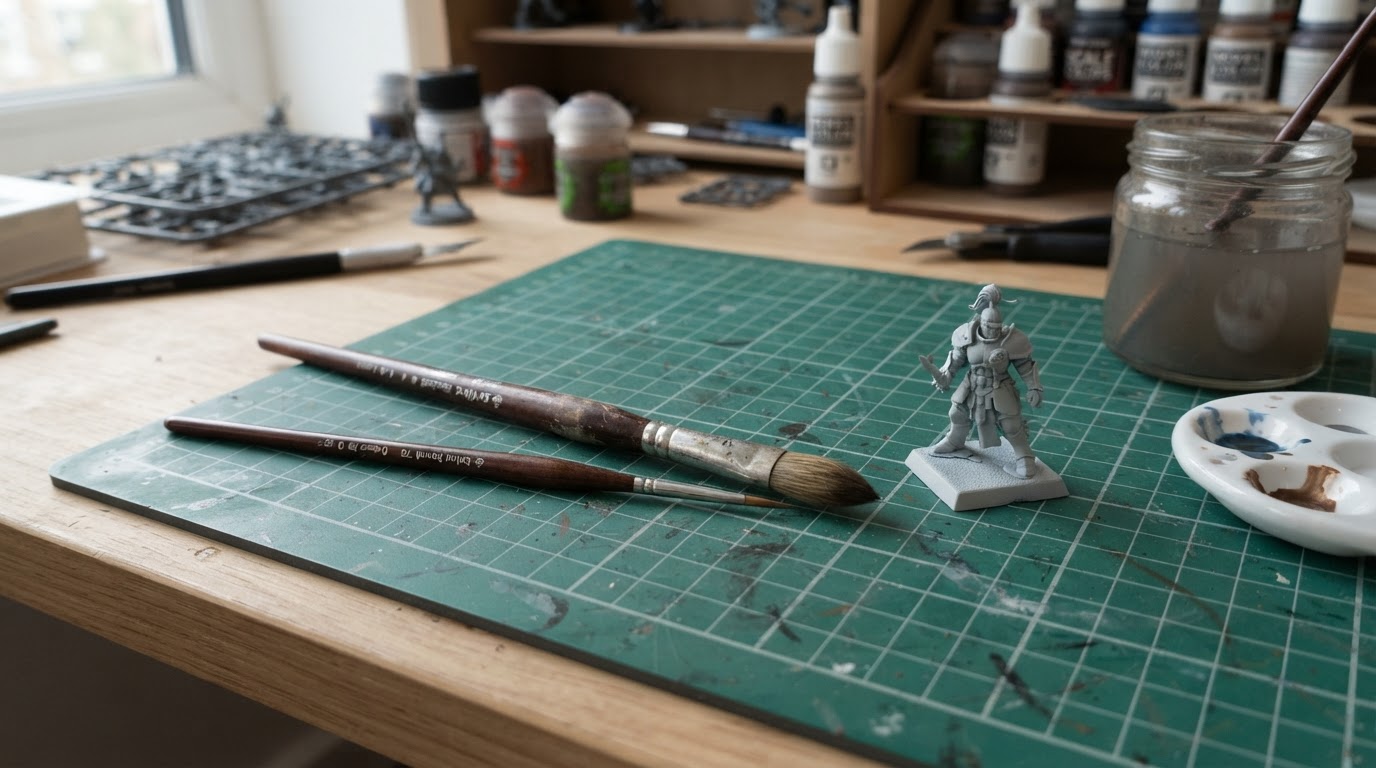
A round in the size 0 to 2 range with a sharp tip will handle most miniature painting: base coats, edge highlights, and small details. Reach for a finer brush only when the stroke calls for it. A dedicated detail brush earns its place when you are painting eyes, lettering, or thin lines.
The classic beginner mistake is buying the smallest brush in the catalog. Very small brushes hold very little paint, so the paint dries in the bristles, the stroke breaks up, and you reload constantly. Work with the largest brush that still gives you control, and let the tip do the fine work.
A practical starting pair is one mid-size round for general work and one fine detail brush. Add a broader flat or wash brush if you are painting terrain, large bases, or vehicles. Because brush sizes are not standardized across lines, do not compare by number alone. Check the actual bristle dimensions listed for the series you are considering.
Sets or singles?
Sets are convenient and usually cheaper per brush. They are also the better format for a gift, because they present well and give the recipient options to try. The catch is that most sets include one or two sizes you will rarely touch, and the advertised saving only counts if you use what is inside.
Singles make sense once you know your medium and your habits. You buy the size you keep reaching for, replace it when it wears out, and skip the filler. For a returning hobbyist, two good singles often beat a large set.
Before buying either, do the arithmetic. Add up the single-brush prices for the sizes you would actually use and compare that total with the set price. Also check that every brush in a set belongs to the series you think it does, because mixed sets are common.
How to check price and stock before you buy
Prices and availability move, so treat any figure you saw earlier as a starting point and confirm it at checkout.
- Identify the exact series, hair type, and size you want.
- Search that full name rather than the brand alone, so you are not comparing different products.
- Compare a specialist art-supply retailer with a general marketplace. Check shipping cost, delivery time, and the return window, not just the sticker price.
- Confirm that the listing photos and description match the series, since bundles and older generations can share a similar title.
- Check stock at the moment you order, and keep the order confirmation in case the listing changes.
For a gift, buy from a seller with a clear return policy, and confirm the recipient's medium before choosing a set.
Care, and how long a brush lasts
Care is the main variable in how long a brush keeps its point.
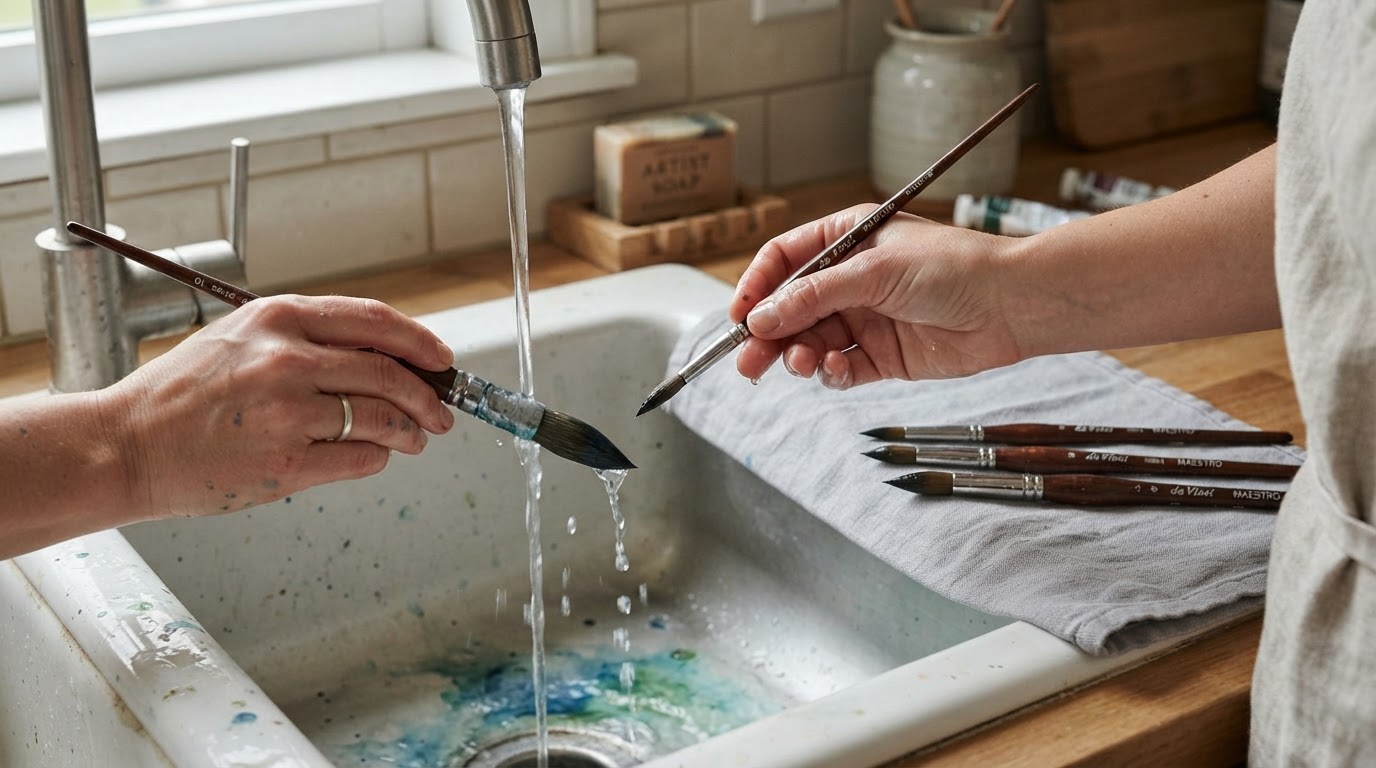
- Rinse the bristles thoroughly after every session, working from the ferrule to the tip.
- Never leave a brush standing bristles-down in water or solvent.
- Reshape the tip with clean fingers while it is still damp, and let the brush dry flat or tip-down.
- Deal with dried acrylic promptly. Once it hardens in the ferrule, the bristles splay and the point is gone.
- Store brushes so the bristles are not bent or crushed.
Expected longevity is not something to take from a general guide, because it depends on the hair type, the medium, and how consistently you clean. Check the manufacturer's care instructions for your exact series, and judge a brush by whether it still comes to a point after cleaning.
The short version
- Match the series to your medium first. Watercolor, acrylic, and oil brushes are not interchangeable.
- Choose hair type on trade-offs: natural hair for water retention and a fine point, synthetic for durability and lower cost.
- For miniatures, start with a round around size 0 to 2 and add one fine detail brush.
- Buy a set for convenience or gifting. Buy singles once you know your medium.
- Verify the exact series and size, then compare specialist retailers and marketplaces on total cost and returns.
- Rinse, reshape, and dry flat after every session. That habit decides how long the point survives.