What the two listings actually specify
Loose miniature paint mixing balls are sold by diameter and count, while the glass example here is a factory-installed part, and the two listings below split exactly that way.
The Army Painter's current Mixing Balls listing, reference TL5041P, is the more explicit of the two. It specifies 100 high-grade stainless steel balls at 5.5 mm and instructs the buyer to add two to a paint bottle, replace the dropper and cap, and shake for 30 seconds. The page also explains the count — two balls move in a more randomised way than one, which the maker presents as a more efficient shake — and describes the balls breaking up clumps and solidified particles in heavy, old or separated paint. Its rustproof and no-discolouration statement is the manufacturer's claim for that product. It does not extend to an unbranded bag of bearings.
The Scale75USA WHITE listing documents the other route. It describes the current Avante Art AC01 bottles as 20 ml, each with a 5 mm glass agitator and a freshness seal. That is a factory-installed agitator, not a loose bead sold for retrofitting, and nothing on the page describes dropping a bead into a bottle that came without one.
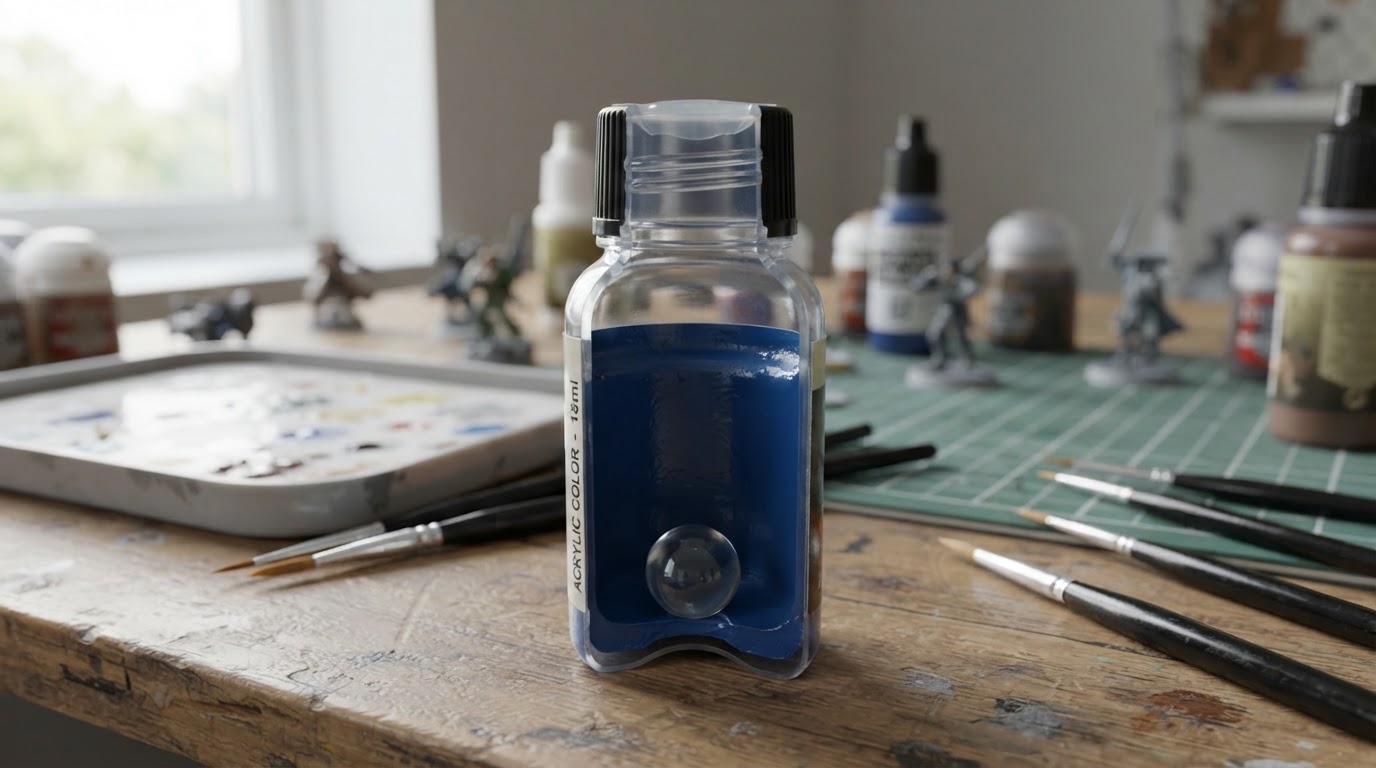
The same page also carries two product generations at once. While describing the new 20 ml bottle it still shows "ACRYLIC PAINT 15ML" and the line "SC-01 replaced with AC01". Capacity is therefore the least dependable number on the page. What the listing establishes is that Scale75 packages a 5 mm agitator with this bottle.
Neither listing compares the two materials on mixing speed, and neither reports how either behaves inside a bottle over months of shaking. Any statement that one material mixes better or lasts longer goes beyond these two pages.
Matching a ball to the bottle
The opening sets the first limit. A 5.5 mm ball is added through the bottle opening after you remove the dropper as the maker directs and must not obstruct dispensing, and a diameter quoted for beads packed for aquariums or jewellery says nothing about either. Use the figure the paint product states, in a listing that also gives instructions for a paint bottle.
If the maker lists an agitator inside the bottle you are holding, or you already know one is in there, keep it and skip the add-in. A count instruction belongs to the same logic: two 5.5 mm balls is what the Army Painter product tells you to use, and an unlabelled bead from elsewhere arrives with no such instruction attached.
What mixing moves, and what it cannot fix
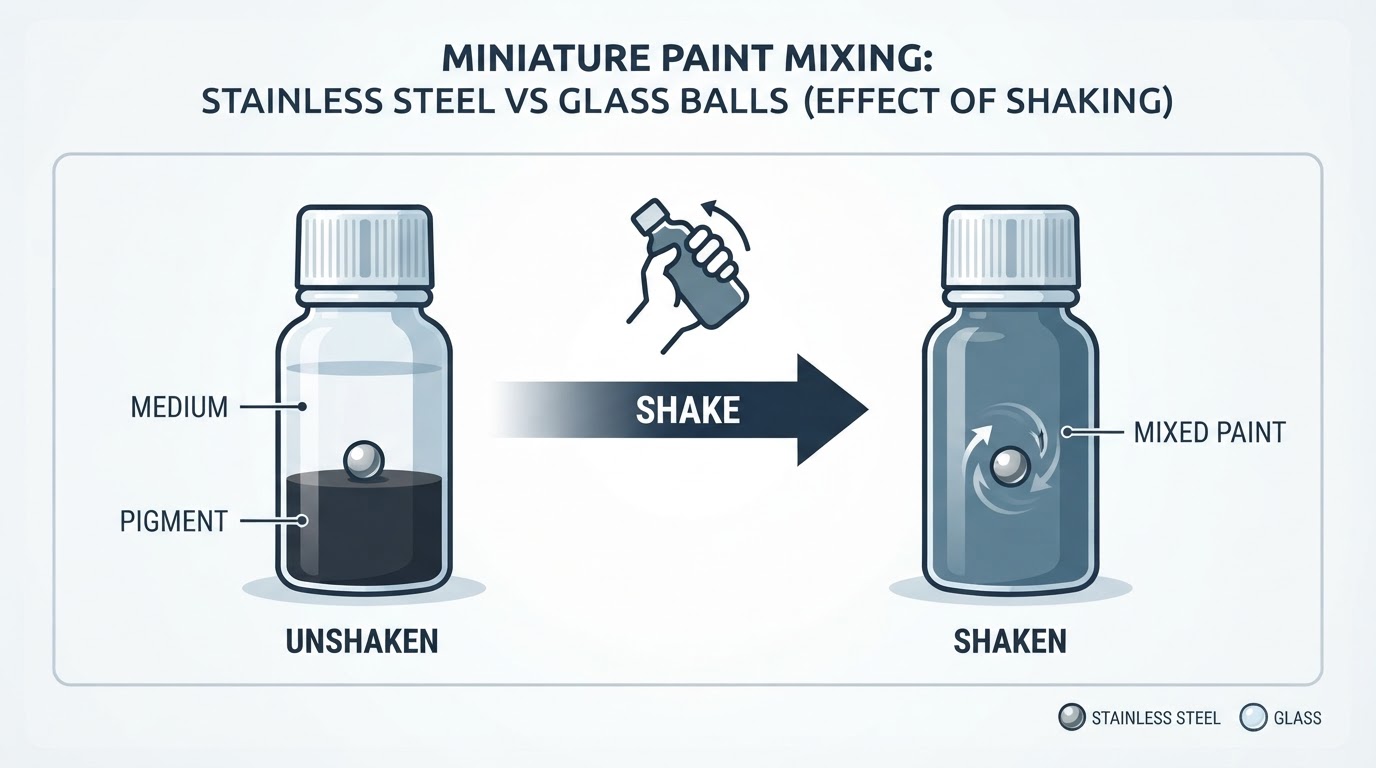
A ball in a bottle is a mechanical stirrer with a narrow job. Shaking moves settled pigment back into the medium, so the paint you dispense is closer to the paint that was filled. That is what the Army Painter page describes when it talks about pigment sinking, paint separating over time, and clumps forming in heavy or old paint.
Cured acrylic is a separate problem. Once paint has set in a neck or across a lid, a ball rattling in the bottle underneath does not dissolve it, and shaking longer does not change that. Separation responds to mixing; a set film does not, and an agitator addresses only the first of the two. When a bottle has separated, the practical first move is to mix before adding anything, and the guide to paint separating in the bottle covers how to read that result.
Four checks for the bottle in front of you
- Does the maker list an agitator inside this bottle, or do you know one is there? Keep it rather than adding a second, differently sized object beside it.
- Will the ball clear the opening? Go by the diameter stated on the paint product, not by a bead's size in a different product category.
- Does the product say how many to add and how long to shake? Two per bottle and 30 seconds are the documented figures for the Army Painter balls.
- Does a discolouration claim cover the pack you are holding? A rustproof statement written for one product says nothing about the bag in your hand.