Cold, frozen and damaged are separate observations
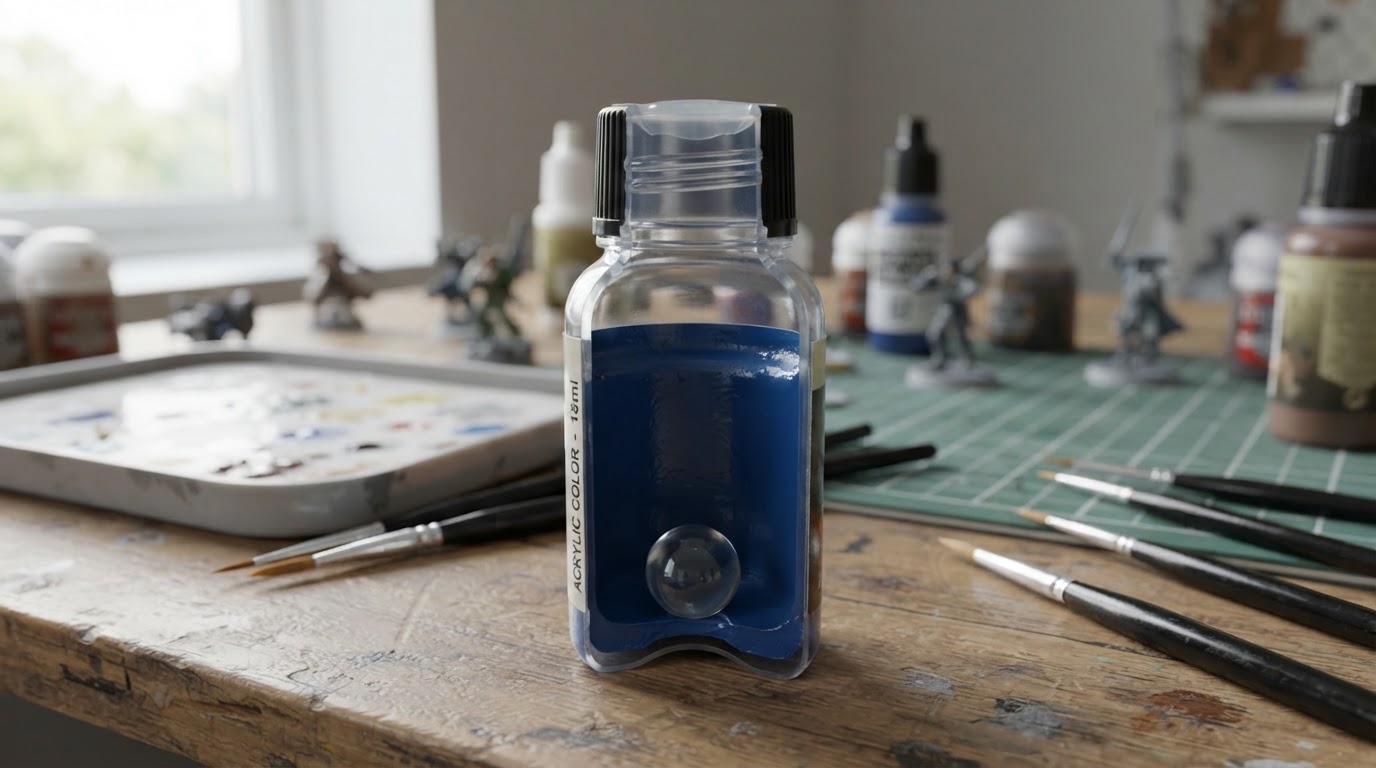
A bottle can arrive cold without having frozen. What a bottle experienced in transit depends on how cold the air around it became, how long it stayed there, and how often it cycled. The arrival condition does not tell you any of those values: a chilled bottle may never have reached freezing, and a bottle that arrived at room temperature may have been below freezing earlier in its journey.
That leaves two things you can establish yourself. One is documentation — which product and batch arrived, and in what condition. The other is behaviour — whether the paint still mixes and dries the way that product normally does. Which of freezing, age, contamination or something else produced a poor result is a further question, and a sample cannot answer it.
What GOLDEN's freeze/thaw figures cover
GOLDEN Artist Colors says in its cold-weather guidance that its own acrylic products withstand at least five freeze/thaw cycles in its tests, and it recommends storing acrylics airtight at 60–70°F / 16–21°C. The same article notes that orders left on a freezing porch overnight should still be usable. Read it at Painting in the Cold.
Those are GOLDEN's claims about GOLDEN's products and GOLDEN's testing. They give one maker's water-based acrylics useful context for a hobbyist. They do not establish a freeze/thaw tolerance for another brand or line, and our own evidence does not authenticate what other formulations are rated for. For the bottle in front of you, the label, the safety data sheet and the maker's support answer are the authority on storage and freezing.
Application temperature is a different question
GOLDEN recommends applying waterborne acrylics above 49°F / 9°C and ideally above 60°F / 16°C, and explains that below the minimum film-forming temperature the binder particles cannot coalesce into a continuous film, which shows up as cracking, poor adhesion and cloudiness. GOLDEN's drying note also explains how application temperature affects film formation.
This guidance describes wet paint forming a film on a surface. A sealed bottle in a delivery truck is a different situation: a bottle can come through a cold night and still produce a poor coat if it is opened in a 45°F garage, because the film problem happens after application. The 49°F / 9°C figure is GOLDEN's number for its own products and does not set a threshold for every model paint. The practical response is the same either way — let the room, the model and the paint sit at normal indoor temperature before you start, and allow longer drying time in a cool room.
The drying note also covers storage. It advises against freezing acrylic paint, notes that most will survive several freeze–thaw cycles, and warns that lids and jar threads need cleaning so the cap seals properly. Paint dried in the threads is one way a bottle develops a skin under a cap that no longer closes, whatever the weather was during delivery.
Record the delivery before you open anything
Photograph the parcel and the bottles, note the label and the batch or lot code, and write down the condition on arrival — frozen solid, partly frozen, cold but liquid, leaking, cap cracked. Keep the packaging and tracking until you know whether you need them. A cracked cap, a split seam or paint loose in the box is a shipping-damage question for the seller, and it comes before any sample test.
Let sealed bottles return to their working conditions
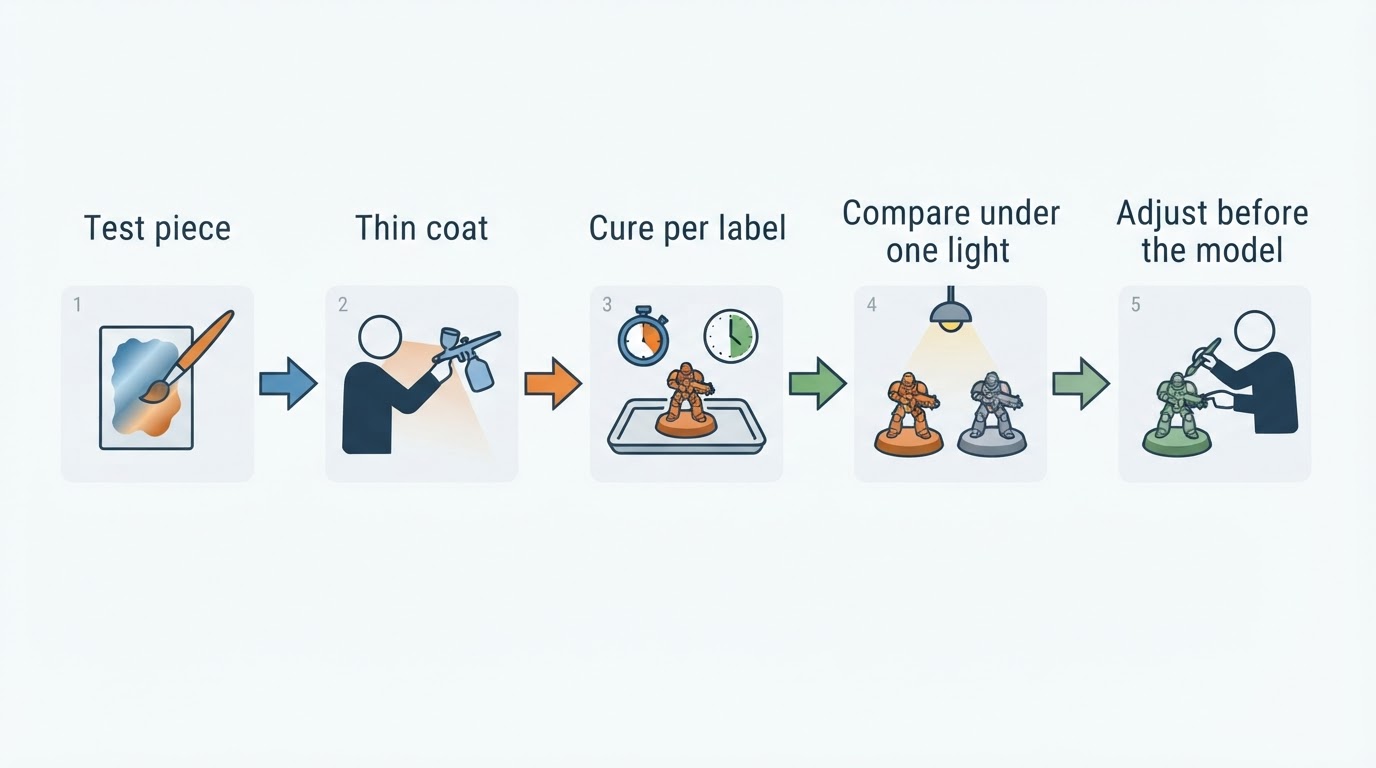
Hot water, a radiator, an oven, a microwave, a hair dryer and a heat gun all warm the outside of a bottle faster than the inside, and none of them is a supported way to treat acrylic paint. GOLDEN's shipping guidance for finished artwork says not to unpack immediately and to let the work adjust gradually, passing it through a cooler space first when it has been below freezing. That guidance was written for paintings on a support; applying the same gradual approach to a sealed bottle is an inference from it, not a manufacturer's instruction for paint containers.
Stand the bottles upright so paint stays away from the cap, put them in a room at normal working temperature, and give them time. There is no thaw time worth quoting, because bottle size, fill level, foam packing and starting temperature all change it. A liquid that sloshes is not evidence that the contents reached room temperature, since a partly cold bottle sloshes too, and ice you cannot see through the side of a full bottle is not an observation at all. If you cannot establish how cold the paint became or whether it froze, ask the maker or the seller instead of running a test that cannot answer the question.
Check a separate sample: wet on the palette, dry on scrap
Mixing and surface behaviour are things you can observe directly. Do both away from the bottle so the rest of the contents stay untouched.
Put a small amount on a clean, non-absorbent palette and mix it the way the maker instructs. Notice what refuses to respond: grit that will not break up, a stringy or gelatinous body, lumps that stay intact. Paint that separates slightly and mixes smooth is behaving like ordinary paint; if that is the problem in front of you, paint separating in the bottle covers it without any cold weather involved.
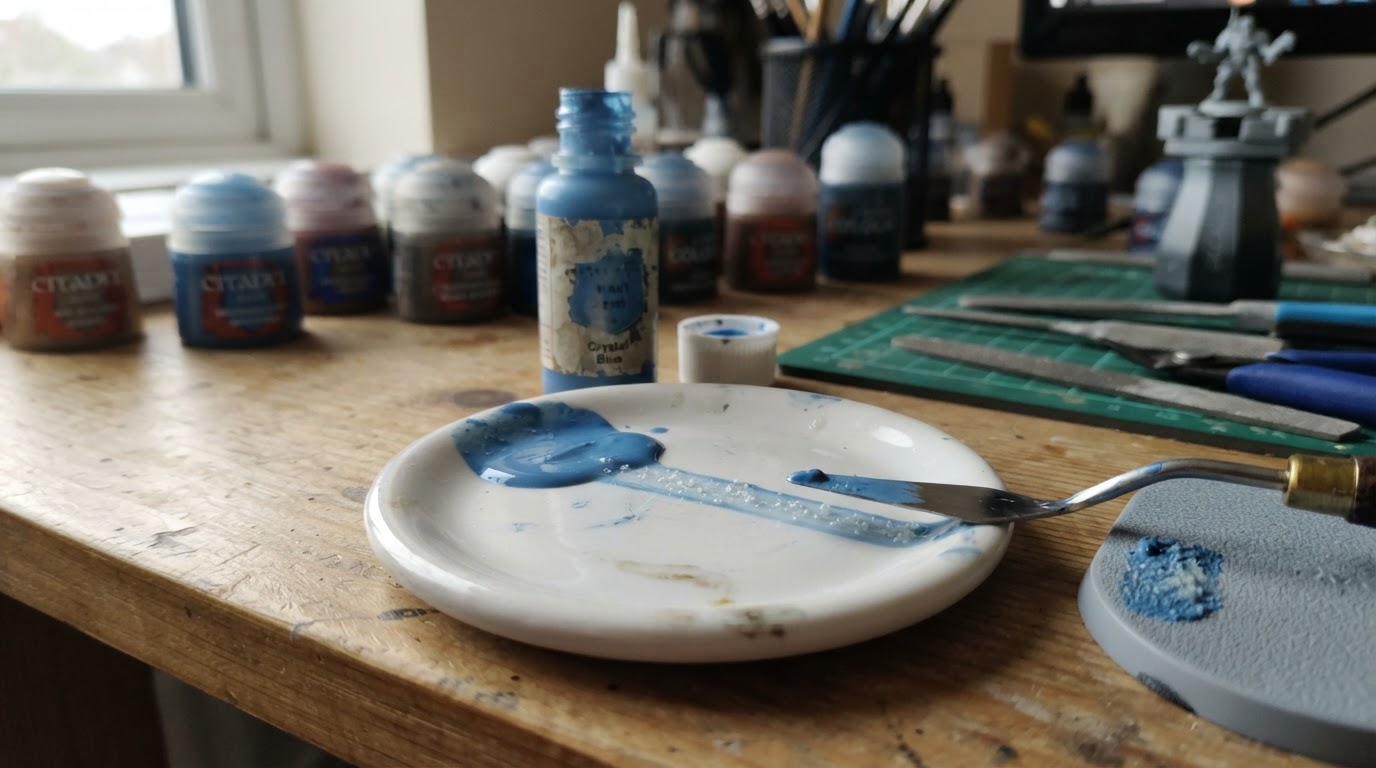
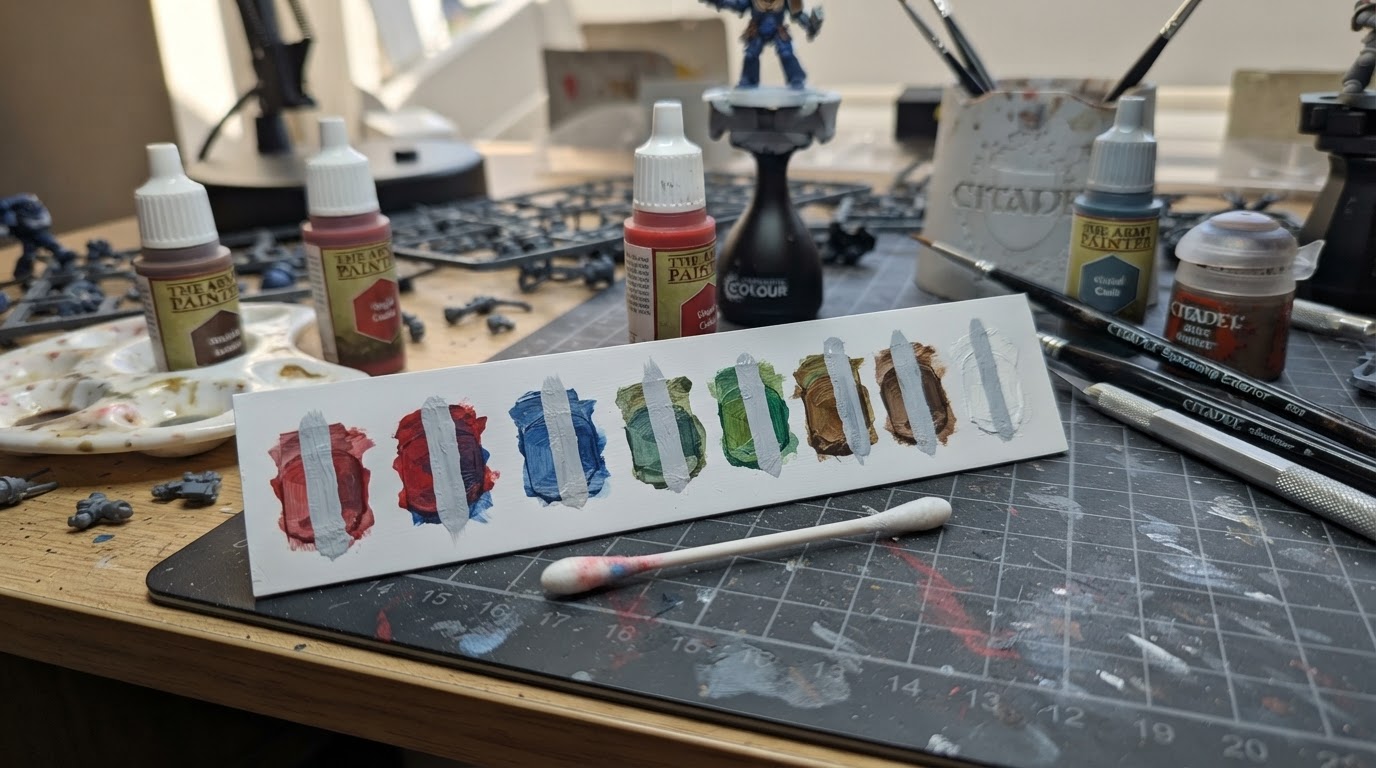
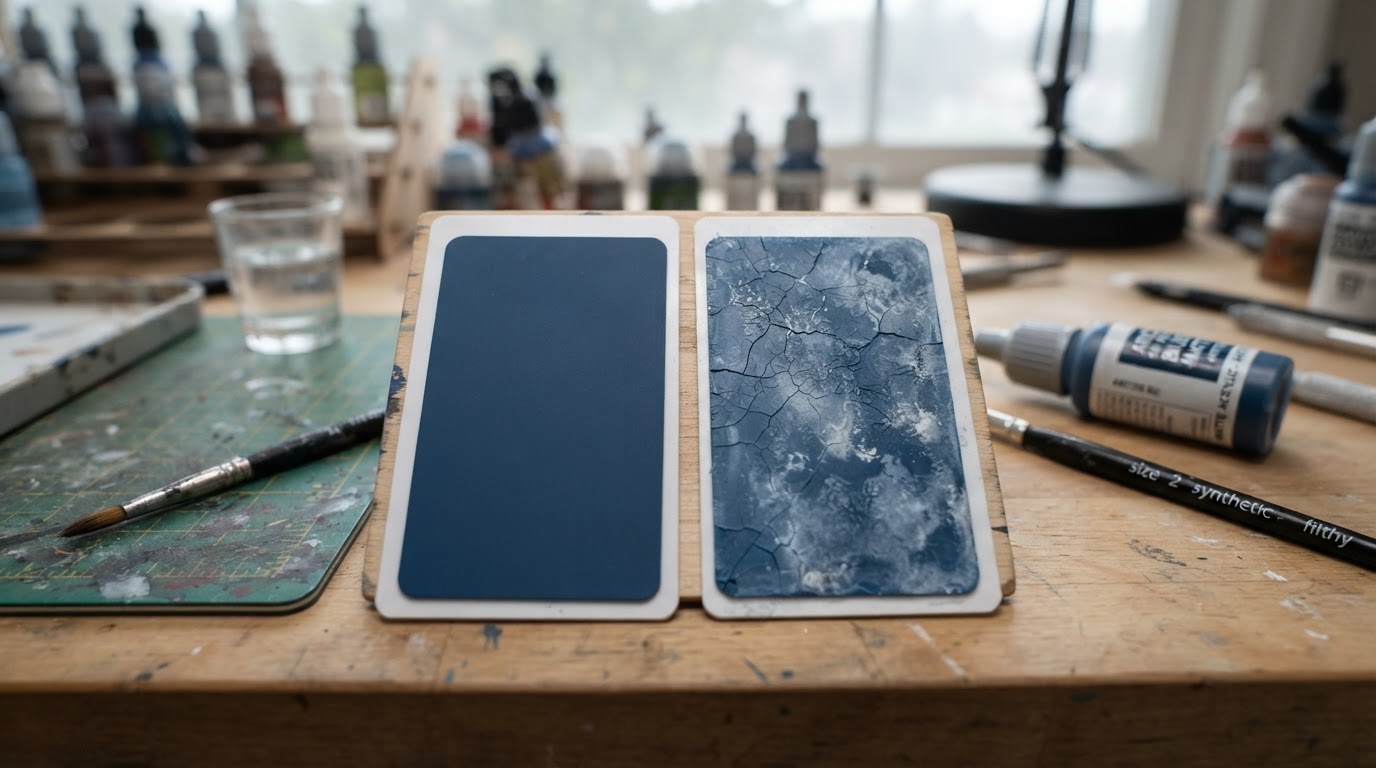
Then dry a coat on scrap prepared the way you prepare models — primed plastic, a spare base or a piece of the same material. Apply one thin coat, let it dry fully at room temperature, and compare it with what that paint line normally gives you. Cracking, a cloudy or powdery film, or a gloss where the paint usually dries matte are signs that the film is not forming as it normally does. An older bottle of the same paint used on the same scrap with the same brush and thinning makes the comparison easier: you are looking for the bottle that behaves differently.
What you notice | What it establishes | Next step |
|---|---|---|
Bottle is cold to the touch and the contents move when tilted | The bottle feels cold and the contents move; nothing here shows whether it froze or for how long | Let it reach its labelled working conditions, then check a separate sample |
Watery layer above a thicker body that mixes back in | Settling and separation, common in paint that has never been cold | Mix as the maker instructs before judging the bottle |
Grit, stringy gel, lumps that will not break up, or a skin under the cap | The paint no longer mixes as it should; the observation does not identify freezing, curing, contamination or binder loss | Check a wet sample and a dried swatch; if it persists, contact the maker or seller |
Paint hardened in the dropper tip or cap threads | Paint dried in place, often from an earlier use | Clean the tip and threads, then recheck the bottle |
Paint dried in a tip or in the cap threads is the case covered in how to revive dried miniature paint.
A usable swatch supports using that sampled paint under those conditions. A poor swatch warrants checking the maker's guidance; neither result identifies the shipping temperature, proves freezing caused it, or guarantees the rest of the order.
When to contact the maker or seller
Persistent grit, stringy gel or a film that will not form after a proper mix and a fully dried swatch is the point to stop working on the bottle and ask the company that made or sold it. Send the batch code, the arrival photographs and what the swatch did. Adding solvent, flow improver, medium or extra water changes the paint you are evaluating, so the sample stops describing the bottle that arrived.
The same handoff applies when the label states a storage or freezing limit, when the bottle arrived leaking or cracked, or when the product is a medium or additive rather than a straight acrylic. Replacement and refunds fall under the seller's policy; a sample can describe the problem and cannot decide the remedy.