What the two reviews actually found
In Stahly's original Speedpaint review, light-grey acrylic painted over samples left for more than 24 hours picked up the colour underneath. The effect remained visible after multiple coats. He found varnish could help isolate the colour, but applying the varnish could itself disturb the old layer. Those observations concern his samples and method; the elapsed time did not establish complete cure for every paint film.
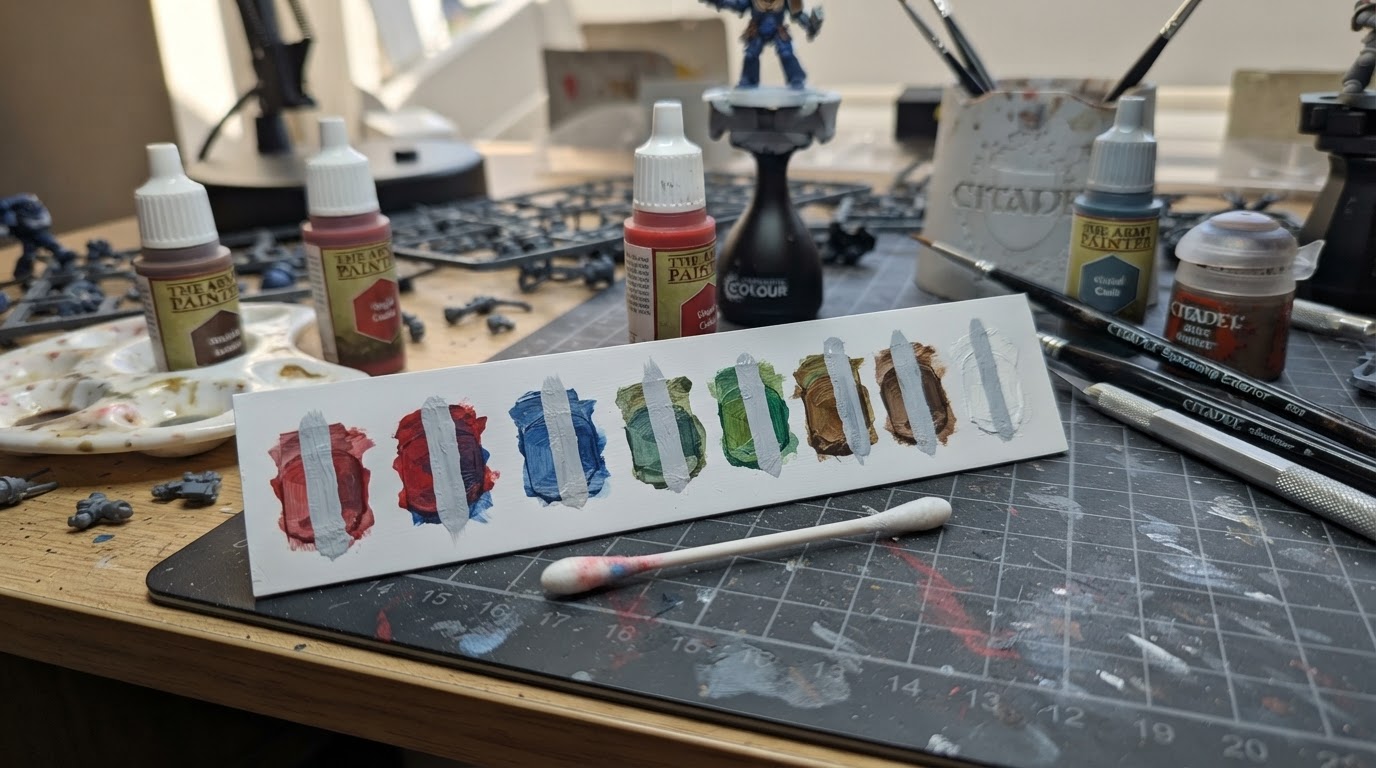
His Speedpaint 2.0 review compared wet-swab rubbing and pale overpainting at 30 minutes, two hours and 24 hours. Some colours still affected a pale topcoat at 30 minutes; that bleeding had stopped by about two hours in the samples described. Some swabs still showed slight colour after 24 hours. He also found the new paint harder to reactivate deliberately for blending, including with a wet brush.
These are the reviewer's experiments, not tests performed by Hands-On Hobby Notes. He disclosed that The Army Painter supplied the review sets. The manufacturer's current range page confirms that 2.0 is a reformulation; it does not establish the result of your particular paint-and-topcoat combination.
Read a touch-up failure correctly
If a pale new coat changes hue as you brush it over a dry-looking base, colour has transferred into the new layer. If hard rubbing removes the coating from an edge, mechanical abrasion may also be involved. A rubbed swab and a gentle painting pass therefore ask different questions.
Choose the check that matches the job. For a pale correction, inspect the actual overpaint. For a blending technique that depends on moving dried colour, inspect whether that movement remains controllable. A coating can be useful for one job and frustrating for the other.
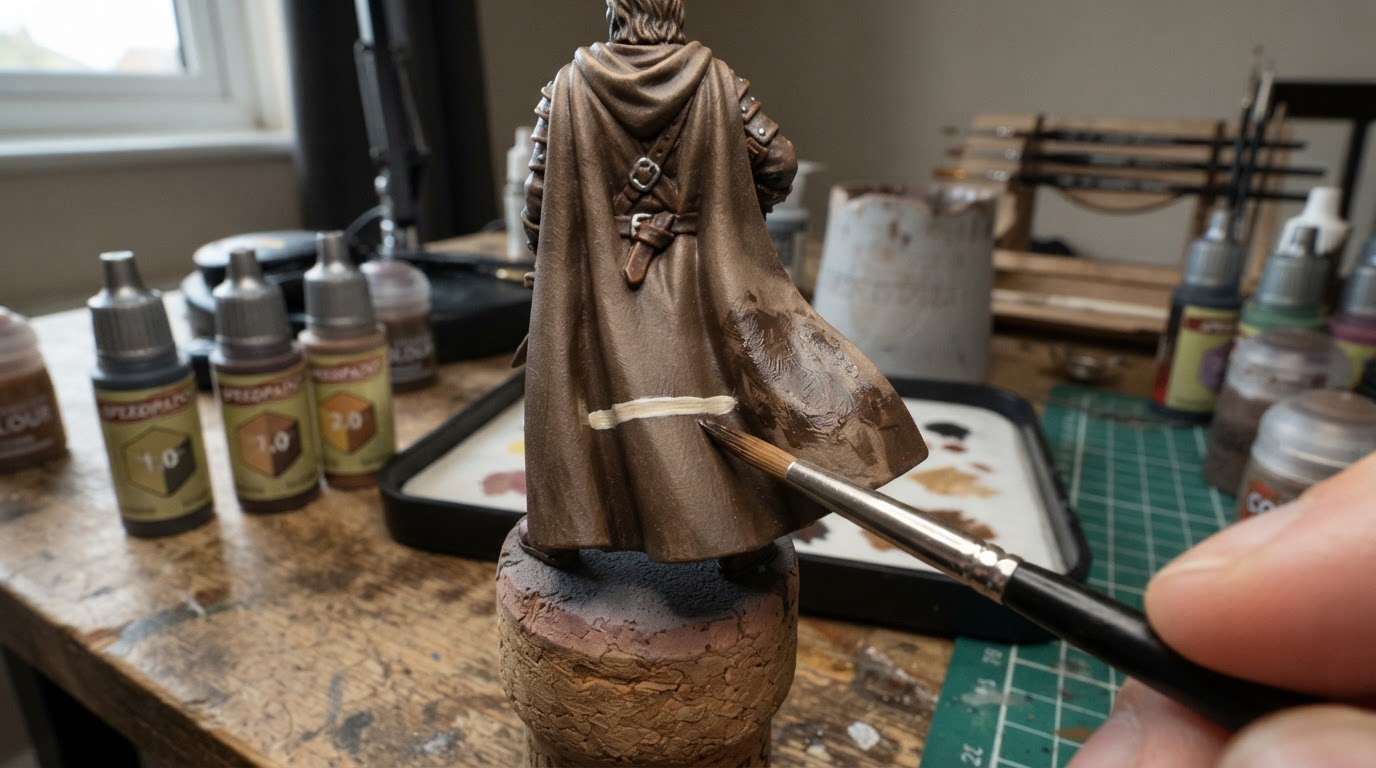
Try the actual next layer before the finished model
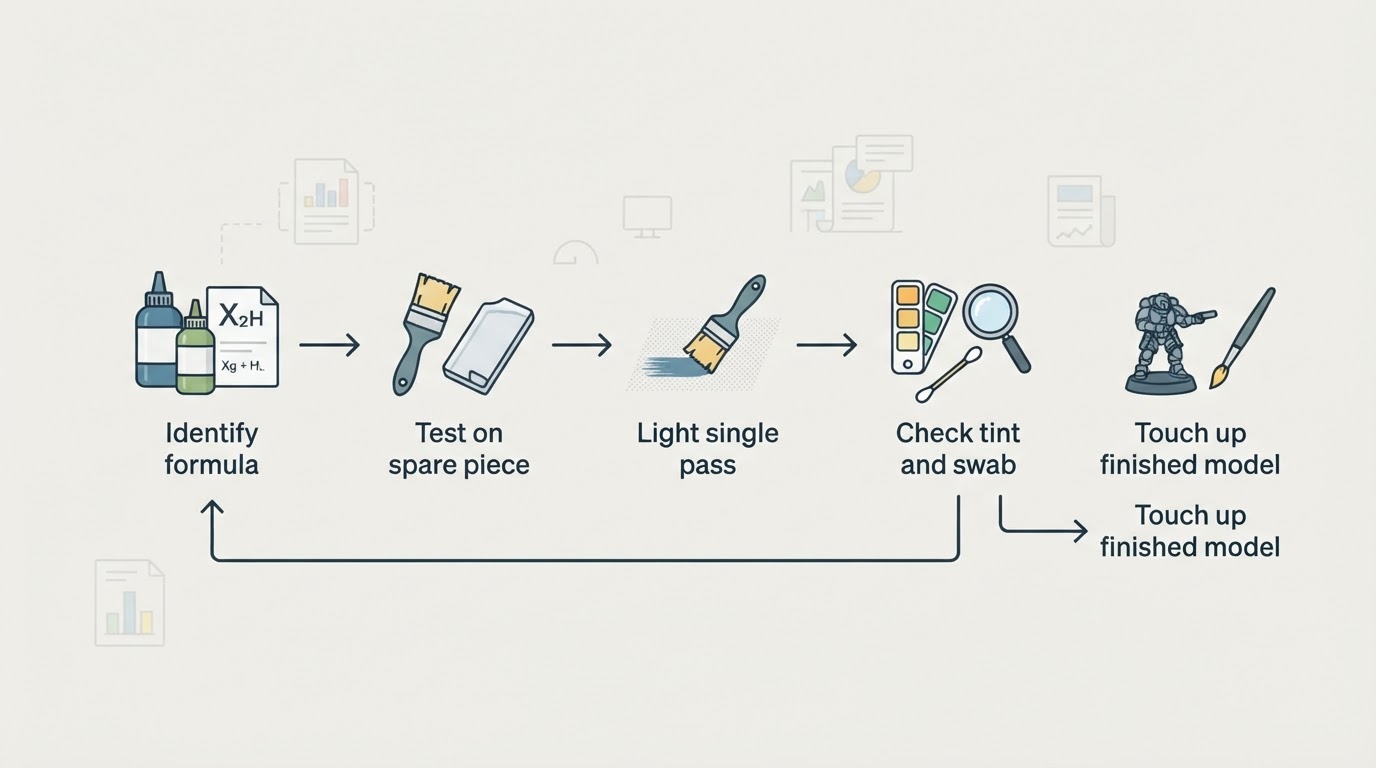
- Confirm the paint generation from its label or product information. A colour name alone does not identify the formula.
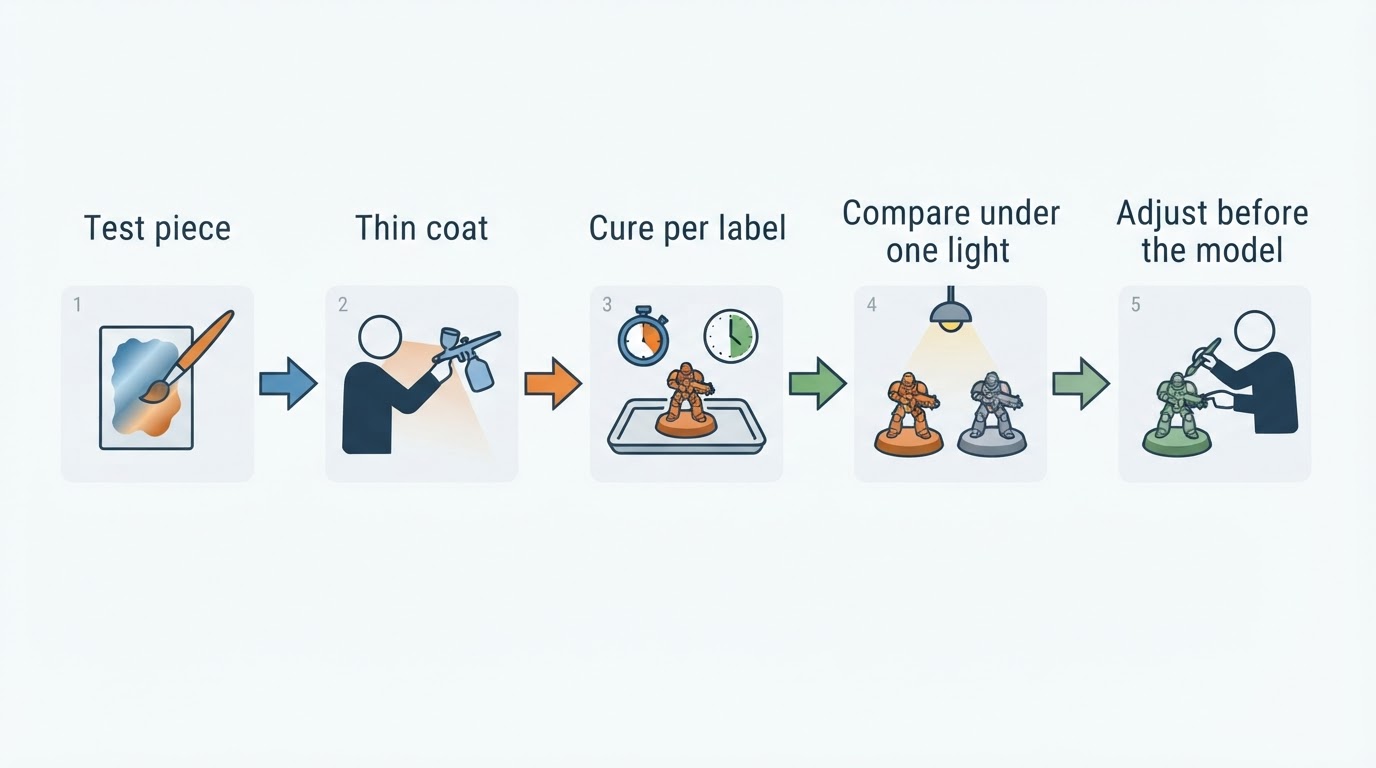
- Paint spare primed material with the same colour and approximate coat thickness you intend to use. Follow the product's drying guidance and note the interval.
- Apply the exact next paint with the brush load and gentle stroke you would use on the model. Look for colour transfer into that new layer rather than adding a hard-rubbing test the job does not require.
- Let the new coat dry before judging it. If it has changed colour, try a longer interval, another compatible topcoat or a different layering approach on the sample. Do not assume extra waiting must fix original Speedpaint, since the older review still observed transfer after more than a day.
- If you want a varnish barrier, include that exact product and application in the sample. Its label and the sample result matter; the review does not certify every clear coat as an effective barrier.
For a glaze, the brush load and the condition of the layer underneath matter as well as the paint label. The glaze-versus-wash guide explains how a restrained glaze differs from flooding a wash into recesses.