How to choose a D&D gift in one pass
The fastest way to pick is to answer three questions in order. First, what seat does the recipient play: player, Dungeon Master, or both? Second, how much of the game do they already own — are they brand new, returning after years away, or deep into a long-running campaign? Third, where does the game actually happen: around a physical table, online through a virtual tabletop, or a mix of the two?
Each answer removes a whole shelf of wrong options. A Dungeon Master who runs online games does not need a dice tower, and a player who shows up with one set of dice in a coat pocket does not need a storage crate with foam inserts. The goal is not to impress the recipient. The goal is to hand them something they will use at the next session.
If you are short on time, use this shortcut: dice, a notebook, and a book they do not own are the three most reliably used gifts in the hobby. Everything else depends on how their table is set up.
Match the gift to the seat at the table
If they are a player — Best for: dice, journals, character gear, and anything that travels well
Players own a character, not a world. Their needs are personal and portable: something to roll, something to track hit points and spell slots, and something to carry it all in. A player who has been in the same campaign for two years is usually the easiest person in the group to buy for, because their preferences are visible — you have seen their dice, their notebook, and how they organize a character sheet.
If they are a Dungeon Master — Best for: books, adventures, screens, and table infrastructure
Dungeon Masters own the world, and the job has more moving parts: monsters to run, initiative to track, rules to look up, and terrain to place. Useful gifts here tend to be the practical ones — reference books, an adventure they have not run yet, a screen, condition markers, initiative trackers, or better storage for the miniatures and terrain they already use. Dungeon Masters rarely complain about receiving another tool.
If they do both — Best for: gifts that overlap both roles
Most long-running players end up running a one-shot now and then. In that case, lean toward shared table gear: a dice tray that keeps rolls contained, a set of condition rings, or a notebook that works for both characters and session notes. You do not need to split the difference with two small gifts; one solid, role-neutral item usually lands better.
Gift categories worth a look
Rulebooks and adventures — Best for: someone whose shelf has gaps
The core rulebooks — Player's Handbook, Dungeon Master's Guide, Monster Manual — and published adventure books are among the most universally useful gifts in the hobby, with one obvious catch: they only work if the recipient does not already own them. Before you buy, ask which books the group uses and whether they play from a physical copy or a shared digital one at the table.
Dice sets, towers, and trays — Best for: almost everyone, at almost every budget
Dice are the safest gift in the hobby: they wear out, get lost, and multiply without guilt. A full polyhedral set (d4 through d20) covers any game system, while specialty dice and oversized "table dice" suit players who already own the basics. A dice tower or a lipped dice tray is genuinely useful at a crowded table and nearly useless if the group plays online, and a dice bag matters most to someone who hauls books to a friend's house every week.
What to check: whether the recipient has strong feelings about dice, whether the table has room for a tower, and whether the group rolls in the open or behind a screen.
Character journals and notebooks — Best for: players who track everything by hand
A dedicated character journal, a session log, or a well-made dot-grid notebook is the gift people do not realize they want until they use it. This is the strongest option when you know the person plays but do not know the game system well, because nothing about a notebook depends on rules edition or campaign. What to check: lined, dot-grid, or hex-grid paper; whether they prefer a large desk notebook or something that fits in a bag; and whether they already type their notes.
Paint sets and miniatures — Best for: the hobbyist side of the game
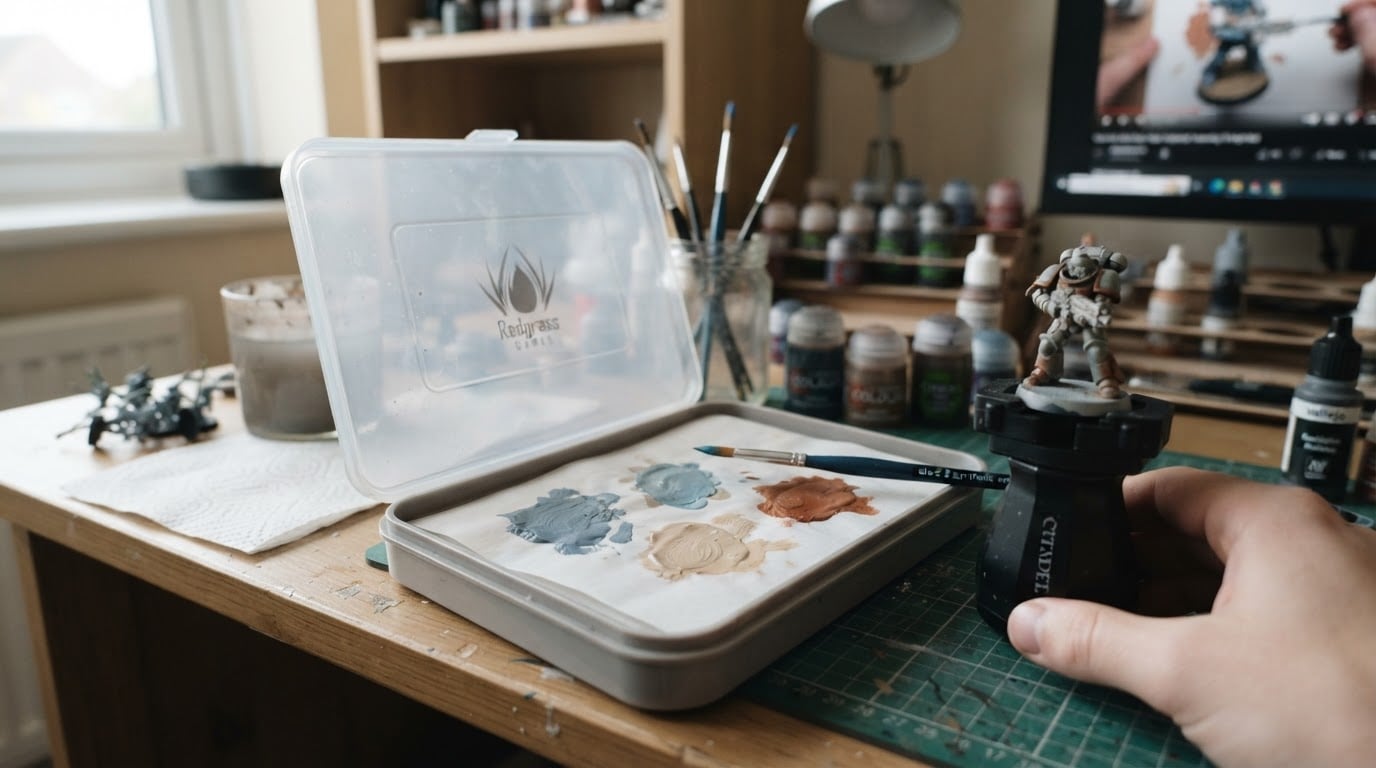
Miniature painting is a hobby inside the hobby, and a gift here works only if the recipient paints. A starter paint set with a brush is a reasonable entry point for a new painter, while experienced painters care about specific paint ranges, brush sizes, and tools — and will tell you exactly which ones if you ask. A single character miniature matched to their current character is a strong personalized gift; a random pile of unpainted figures is usually clutter. What to check: whether they paint at all, what scale their miniatures are (28 mm to 32 mm covers most fantasy tabletop figures), and whether they already own the paint a set would duplicate.
Storage and accessories — Best for: the player or DM who is out of space
Miniature cases, dice storage, book bags, card organizers, and condition markers solve a real problem: the game is physical, and it spreads. Storage is an excellent gift because it is almost never bought for oneself, but it depends entirely on what the recipient already owns. A case with the wrong insert layout is worse than no case at all.
Gifts for new players vs veterans
For a brand-new player, the point is to remove friction: a set of dice, a starter set if you know they want to run the game themselves, a notebook, and something to carry it in. Do not buy a deep campaign book for someone who is still learning which die to roll.
For a returning player, the friction is different. They own older books and older gear, so the useful gift is usually a current core book, a replacement set of dice, or the painting supplies their old set is missing.
For a veteran, buy into what they already care about: a specific adventure, a second copy of the book that lives at the table, a nice tray, or a gift certificate to the store where their group plays. Veterans are hard to surprise and easy to satisfy if you ask one direct question.
What drives the price — and what to check instead of a number
Gift guides love to quote prices. Prices change by season, region, and seller, so treat any figure you see as a starting point and check the current listing instead. What you can compare is what makes one version cost more than another.
- Rulebooks: hardcover versus softcover, official versus third-party, a single book versus a boxed set, and how recent the printing is.
- Dice: acrylic versus metal versus gemstone or resin, mass-produced versus handmade, and whether the set includes all seven polyhedrals or only the common ones.
- Miniatures: unpainted plastic versus assembled and painted, 3D-printed versus kit-molded, and whether the figure needs assembly, glue, and primer before it reaches the table.
- Paints: a starter set versus individual pots, how many colors are actually needed, and whether the range matches the paints the recipient already uses.
- Storage and table gear: fabric versus foam versus magnetic trays, how much it holds, and whether it fits the bag they already carry.
In every category, the cheapest useful gift and the most expensive useful gift differ mostly in materials and finish, not in whether they work.
Where to buy gifts for D&D players
- Your local game store. Best for advice, for seeing dice and miniatures in person, and for keeping the table community alive. Staff usually know the current editions and can tell you what a group actually needs. Check store hours and whether they special-order books.
- Online marketplaces. Best for selection and for finding out-of-print or imported items. Check the shipping date carefully; a gift that arrives three weeks after the session is not a gift. Read the return policy before you buy.
- Maker marketplaces and independent sellers. Best for custom dice, engraved trays, personalized journals, and organizers. Custom work has longer lead times, so order early.
- The publisher's own store or a game store special order. Best when you need a specific official book and want to avoid the risk of a mismatched edition.
Wherever you buy, ask for a gift receipt. Hobby gear is personal, and an exchange beats a shelf ornament.
What to confirm before you buy
- Which edition and printing the table uses, and which core books the recipient already owns.
- Whether the game is in person, online, or both — digital tables make miniatures, terrain, and dice towers far less useful.
- Whether the recipient is a player, a Dungeon Master, or both.
- What they already own, especially dice, paint, and storage.
- Scale and compatibility: 28 mm to 32 mm miniatures, plus the paint or primer they already use.
- Lead time, because handmade, custom, or printed items can take weeks.
- Return policy, in case the group already has two of the same book.
Common mistakes that turn gifts into clutter
The most common mistake is buying the object that looks most like Dungeons & Dragons rather than the object the recipient will actually use. A dice tower, a set of terrain, and a box of unpainted miniatures are all excellent gifts for a table that plays in person with miniatures. For a group that plays online, or for a player who is happy with theater of the mind, they become storage problems.
The second mistake is duplication. Core books, dice sets, and paint ranges are easy to double up on, and a duplicate is the least exciting version of an otherwise good gift. Ask one question before you buy: "What do you already have?" Most players will happily tell you.
The third mistake is buying for the hobby instead of the person. A large paint set is a wonderful gift for a committed painter and a guilt-inducing one for someone who paints one miniature a year. Match the gift to how the recipient actually plays, and the safest picks stay the ones with the widest usefulness: dice, a notebook, a book they do not own, and something to carry it all in.