Why Acrylic Paint Sets the Clock
Wet acrylic rinses out of the bristles with plain water. Dried acrylic is a different material: once it has cured, water will not dissolve it, and only a dedicated brush cleaner or acrylic remover is usually effective (da Vinci). Winsor & Newton describes that cured film as plastic-like and not soluble (Winsor & Newton).
That is why points lose their shape: paint can cure at the base of the brush head, where the bristles meet the ferrule. Rinse as soon as the session ends. During painting, swish the brush clean between colours rather than leaving its point pressed against the bottom of a water cup.
The Everyday Wash, Step by Step
Run this after every water-based acrylic session. It takes about a minute.
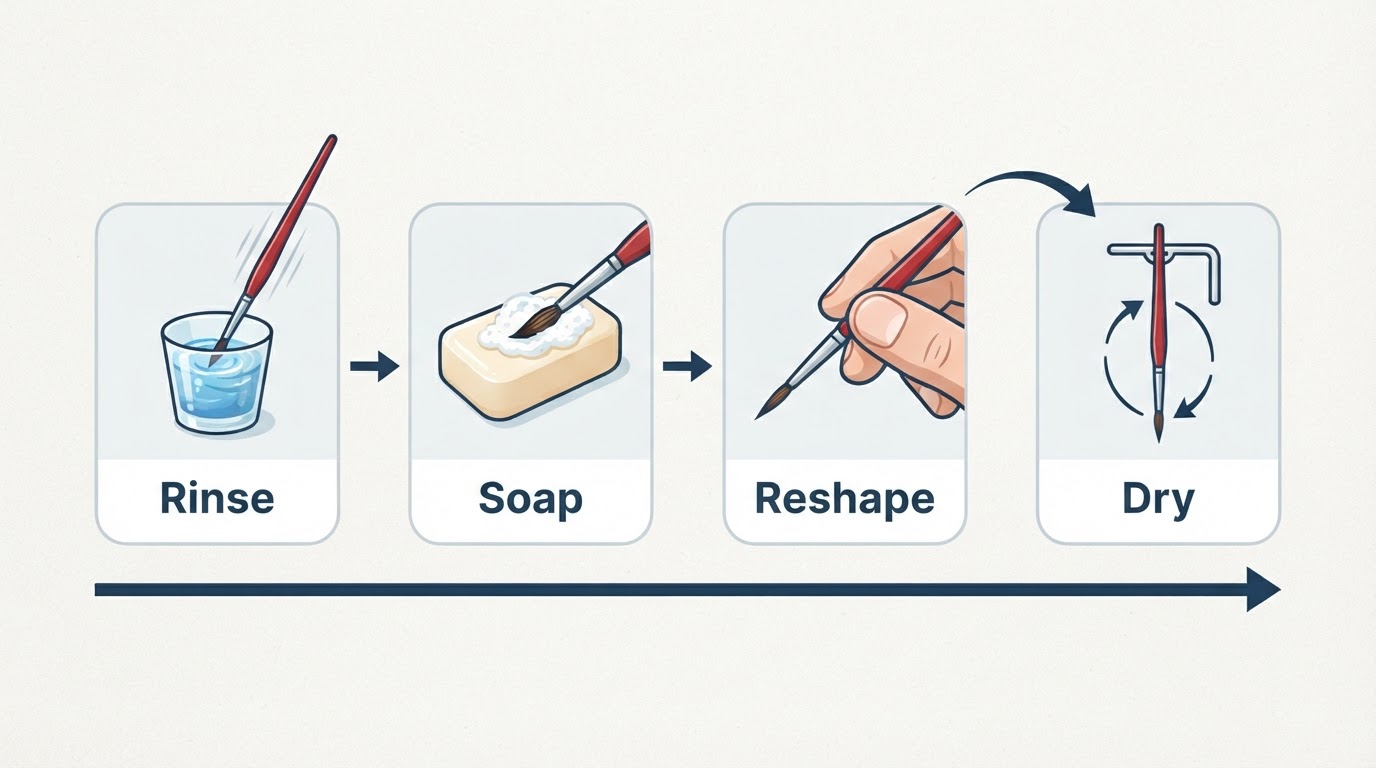
- Wipe and rinse. Wipe the brush on a lint-free rag or paper towel, then hold the bristles under running water to remove loose paint.
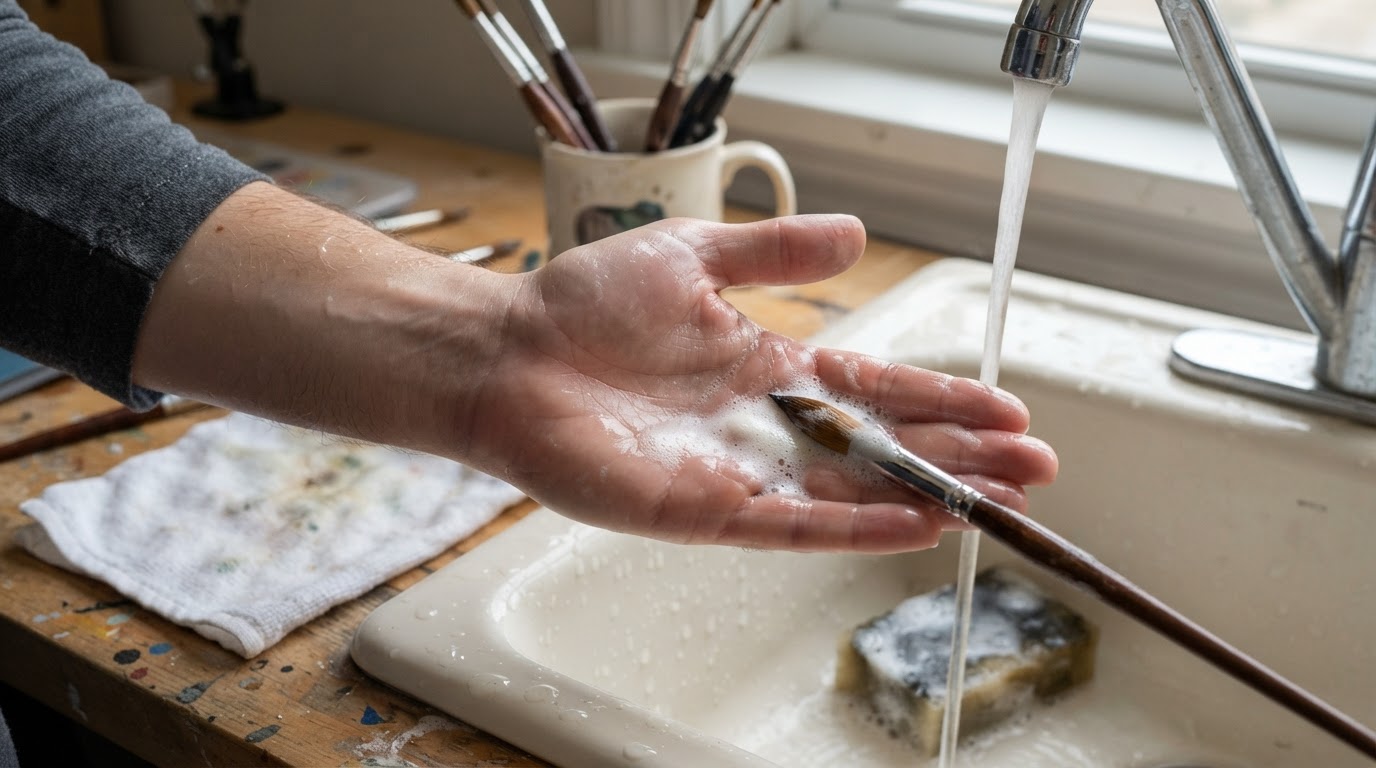
- Lather with mild soap. Swirl the brush in the palm of your hand with a small amount of mild soap. Keep the water cool or warm, never hot: hot water can make paint coagulate and damage the brush (Winsor & Newton).
- Work the base of the head. Pigment collects close to the ferrule, and that buildup is what splays hairs and flattens a point, so gently work the lather into the bristles near the metal (da Vinci).
- Rinse until the water runs clear. Repeat the wash-and-rinse cycle until nothing soapy or cloudy comes out of the head.
- Reshape and dry. Press the brush gently onto a lint-free cloth, reform the point with your fingers, wipe the handle and ferrule dry, and let air reach the head until everything is completely dry.
Decision Table: What You Are Looking At
Use this when a brush does not feel right.
What you see | What it usually means | What to do |
|---|---|---|
Wet, tacky paint when you stop painting | A normal end to the session | Wipe, rinse, wash with mild soap, reshape, dry |
Hard paint at the base of the bristles | Acrylic cured before it was rinsed | Start with mild soap; for cured paint, use a brush cleaner or acrylic remover and follow its label |
Hairs splayed, no clean point after a wash | Pigment residue packed near the ferrule | Clean close to the ferrule with mild soap, reshape while damp, dry fully |
Natural-hair bristles feel stiff or brittle | A strong or degreasing soap stripped the natural oils | Switch to a mild conditioning soap and avoid degreasers |
Rinse water still runs cloudy or soapy | Pigment or soap still lodged in the head | Repeat the wash and rinse until it clears |
Handle or ferrule stays damp after drying | Water trapped in the head | Blot the head, dry the metal and handle, and store only when fully dry |
Bristles warp or go brittle near a radiator | Direct heat, not paint | Dry brushes away from radiators and other direct heat |
Everyday Cleaning vs. Recovering Dried Paint
Everyday cleaning is the routine above. Recovery is what you do when acrylic has already cured, and it is a different job with a different tool.
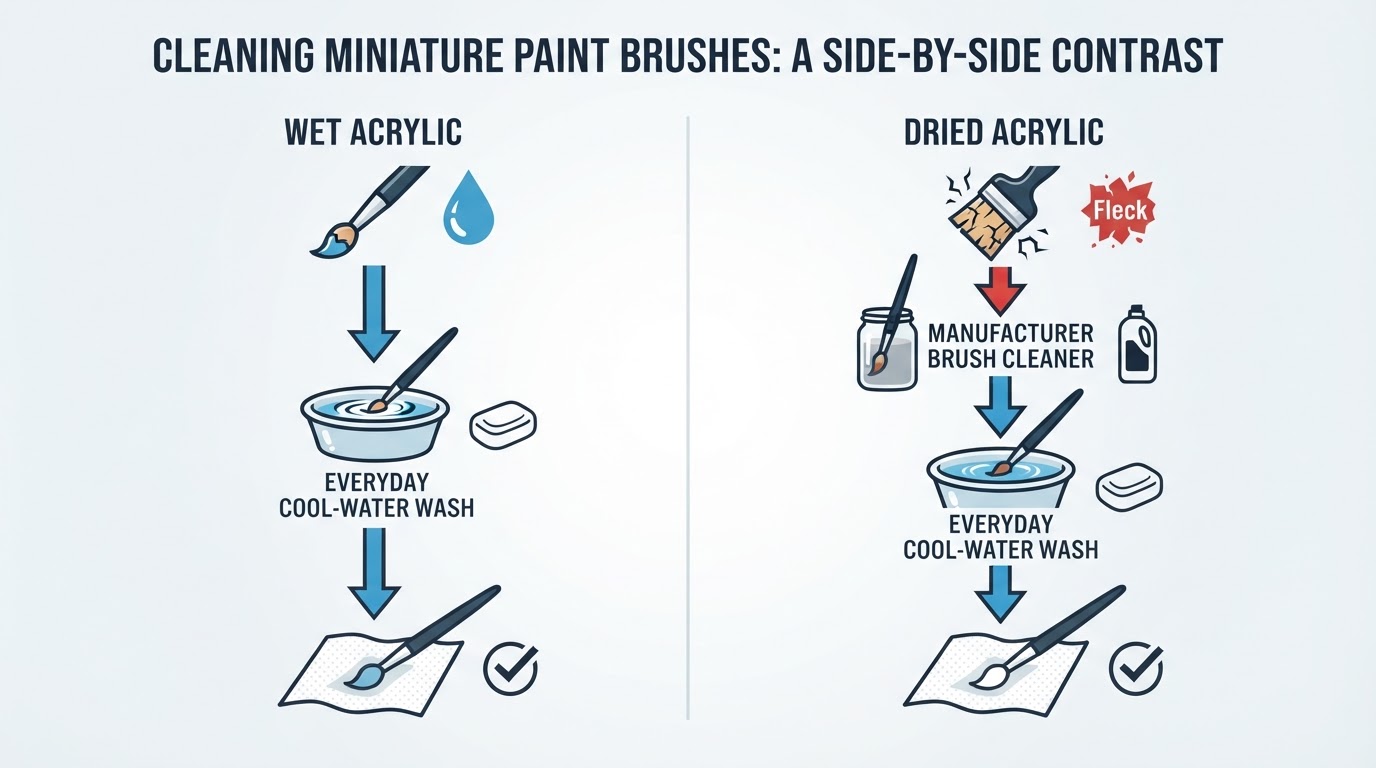
Fresh acrylic washes out with water; dried acrylic usually yields only to a special brush cleaner or acrylic remover (da Vinci). Winsor & Newton's own instruction for dried acrylic is to soak the brush overnight in its Brush Cleaner, then repeat the wash-and-rinse cycle (Winsor & Newton). Treat that as product-specific, not a universal soak time: the label always wins.
After a recovery soak, put the brush back on the normal schedule — mild-soap wash, thorough rinse, complete dry — or the cleaner itself becomes residue in the brush.
Natural Hair vs. Synthetic Bristles
The wash routine is the same for both. The weak spots are not.
Natural hair — kolinsky sable and other brushes that carry a real point — holds natural oils in the fibers. Strong soaps and degreasing formulas strip those oils and leave natural hair dry and brittle, so a mild conditioning soap is the safer default (da Vinci). Synthetic fibers tolerate soap better but share the same two enemies: dried acrylic and direct heat. Ferrule care is identical: work the lather into the base of the head where pigment collects, then dry the metal and handle completely before storing.
If you are still choosing brushes, see our kolinsky sable brush guide. This page covers the other half of ownership — keeping a good point intact once the brush is yours.
Three Questions We Hear Most
Does dish soap work?
Manufacturers recommend mild or conditioning soap and specifically warn that degreasing formulas dry out natural hair (da Vinci). Many dish soaps are built to cut grease; read the label before using one on a sable brush, and prefer a conditioning brush soap.
Can I leave brushes in water overnight?
Water buys time during a session, not storage. Wash and dry the brush as soon as you can instead of leaving it standing in a cup. If you are using a commercial cleaner on dried paint, follow that manufacturer's soak time — there is no universal number.
Will stained bristles ruin my brush?
No. Minor stains are normal after acrylic sessions, and manufacturers say they do not affect the brush's performance or lifespan (Winsor & Newton).
The Completion Check
You are finished when three things are true: the rinse water runs clear, the bristles form a clean point after reshaping, and the ferrule and handle are dry before the brush goes back in the pot.
One disagreement is worth knowing about. Winsor & Newton recommends standing the brush head-up, while da Vinci recommends hanging it bristles-down. Both are aiming at airflow through the head and no water pooling in the ferrule — so use whichever fits how you store your brushes, as long as it dries completely.