What the LAMY Safari actually is
The Safari is not a new product, and that has become part of its appeal. LAMY credits the design to the Development Group Mannheim under Professor Dr. Bernt Spiegel, with Wolfgang Fabian among the group, and the pen carries an iF Industrie Forum Design award. It has been a fixture of the range since the 1980s, which is why you see so many colours and limited editions instead of one fixed look.
The fountain pen itself is a 144 mm, 16 g pen built around a body of matt ASA plastic that LAMY describes as resistant, with an impact-resistant housing. Two details matter more in daily use than the spec sheet suggests. The self-sprung clip is designed to hold the pen securely, and the flattened barrel shape keeps it from rolling off a desk. There is also a viewing window for checking the ink level and ergonomically shaped grip surfaces.
The same silhouette comes in a rollerball and a ballpoint. The rollerball uses the same matt ASA plastic, measures 140 mm and 11 g, and ships with a LAMY M63 refill in black, size M. The ballpoint is the lightest of the three at 138 mm and 14 g, uses transparent CP plastic, and ships with a LAMY M16 giant ballpoint refill, also in black, size M. If you like the design but do not want to deal with a nib and a bottle of ink, those two are the straightforward alternatives within the same family.
Nibs, ink and refills: what you are actually choosing
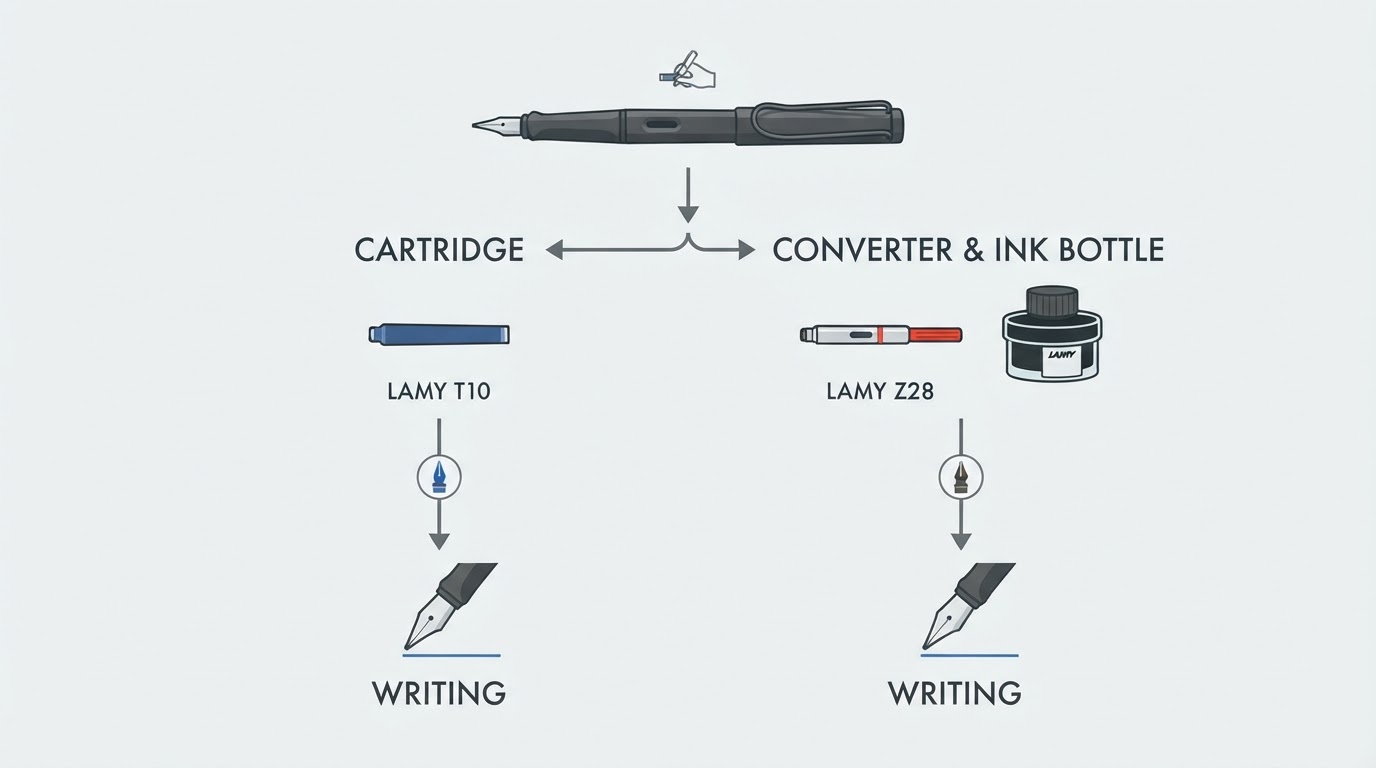
The Safari fountain pen uses a polished steel nib. LAMY lists it in different nib widths, including a left-handed nib, and every pen ships with one blue LAMY T10 cartridge. The Z28 converter that lets you draw ink from a bottle is a recommended accessory rather than something in the box, and LAMY lists it as compatible with the abc, safari, vista, joy, AL-star, Lx, nexx and nexx M.
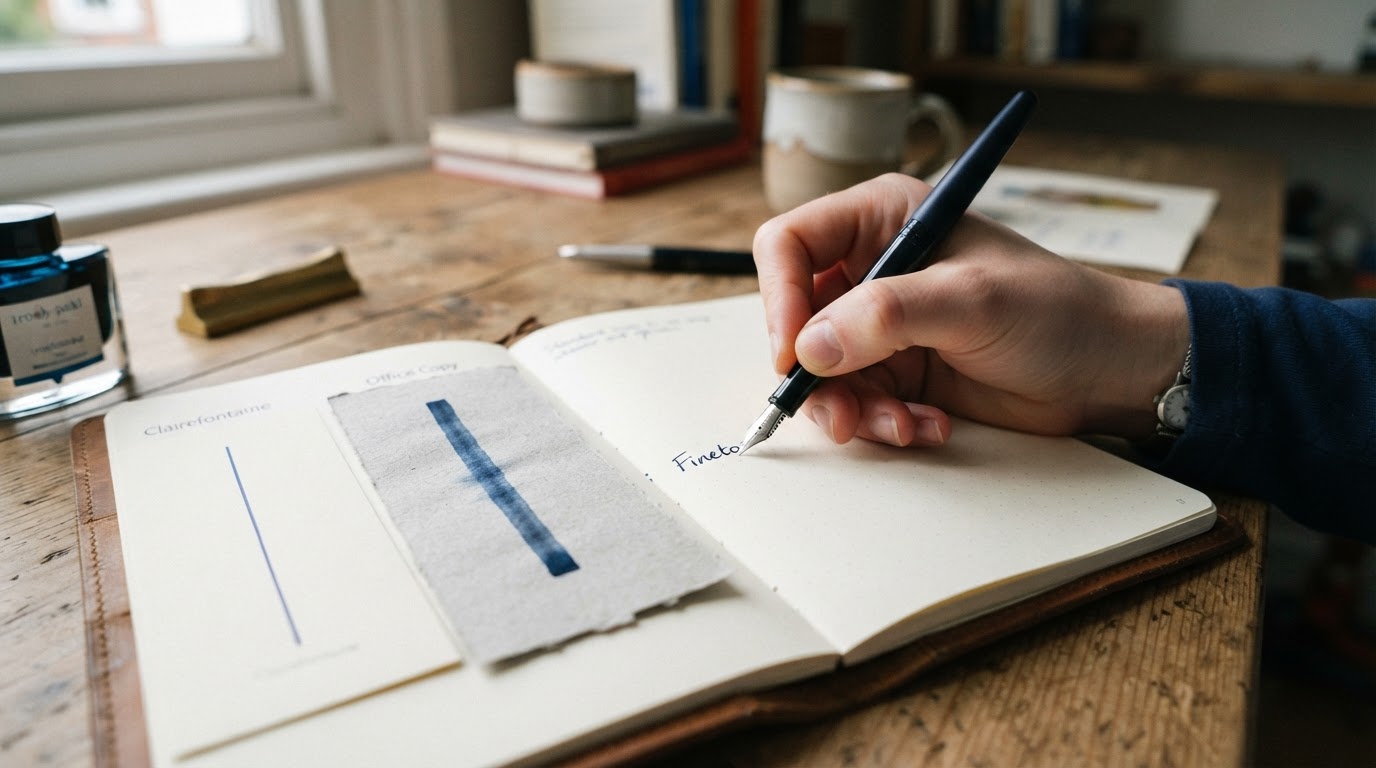
What the product listings do not describe is how each nib grade feels on paper. As a general rule in fountain pens, a finer grade lays down a thinner line and a broader grade puts more ink down, but smoothness and feedback vary by ink and paper as much as by the nib. If feel is your deciding factor, buy from a seller that lets you compare widths, and treat any specific feel claim as something to verify yourself rather than take on faith.
The practical fork is ink supply. Cartridges are the zero-friction route: clip one in, write, replace it. The Z28 converter is the flexible route for bottled ink and gives you access to colours beyond the cartridge range, at the cost of one extra purchase and a bit more cleaning. LAMY's own listing puts the converter alongside the pen as the accessory to buy, which is a useful signal that most Safari fountain pens arrive ready for cartridges first.
Build, grip and everyday use
Here is how the family lines up on the numbers LAMY publishes:
Version | Body | Length | Weight | Refill |
|---|---|---|---|---|
Safari fountain pen | Matt ASA plastic | 144 mm | 16 g | LAMY T10 cartridge or Z28 converter |
Safari rollerball | Matt ASA plastic | 140 mm | 11 g | LAMY M63, size M |
Safari ballpoint | Transparent CP plastic | 138 mm | 14 g | LAMY M16 giant refill, size M |
AL-star fountain pen | Anodised aluminium | 139 mm | 24 g | LAMY T10 cartridge or Z28 converter |
The grip is where the Safari earns its beginner-friendly reputation. The section is shaped rather than round, and LAMY says the grip surfaces are ergonomically shaped. A shaping like that gives your fingers a consistent place to sit, which can help if you are learning to hold a fountain pen, and it can feel like a constraint if you already hold pens in your own way. The left-handed nib option is worth knowing about if you write with a push stroke.
As for durability, the honest answer is that the materials and the design choices point in the same direction: impact-resistant plastic and a flattened, pocket-friendly shape are sensible decisions for a pen that lives in a bag, and LAMY's listing calls it a robust companion for everyday use. What no listing can tell you is how the finish survives a few years of keys and coins, so treat any long-term durability claim, including this one, as something to check in user communities before you buy.
Safari versus AL-star, and how to shop the alternatives
The AL-star is the Safari's closest relative and the obvious upgrade path. It uses the same polished steel nib, the same T10 cartridge, and the same recommended Z28 converter, but swaps the matt ASA plastic body for coloured anodised aluminium, which pushes the weight from 16 g to 24 g and shortens the length slightly to 139 mm. The grip is transparent plastic, and LAMY describes it as showing the ink duct. If you want a pen that feels denser and more metal, the AL-star is the version to look at; if you want the lightest possible carry, the Safari has the edge.
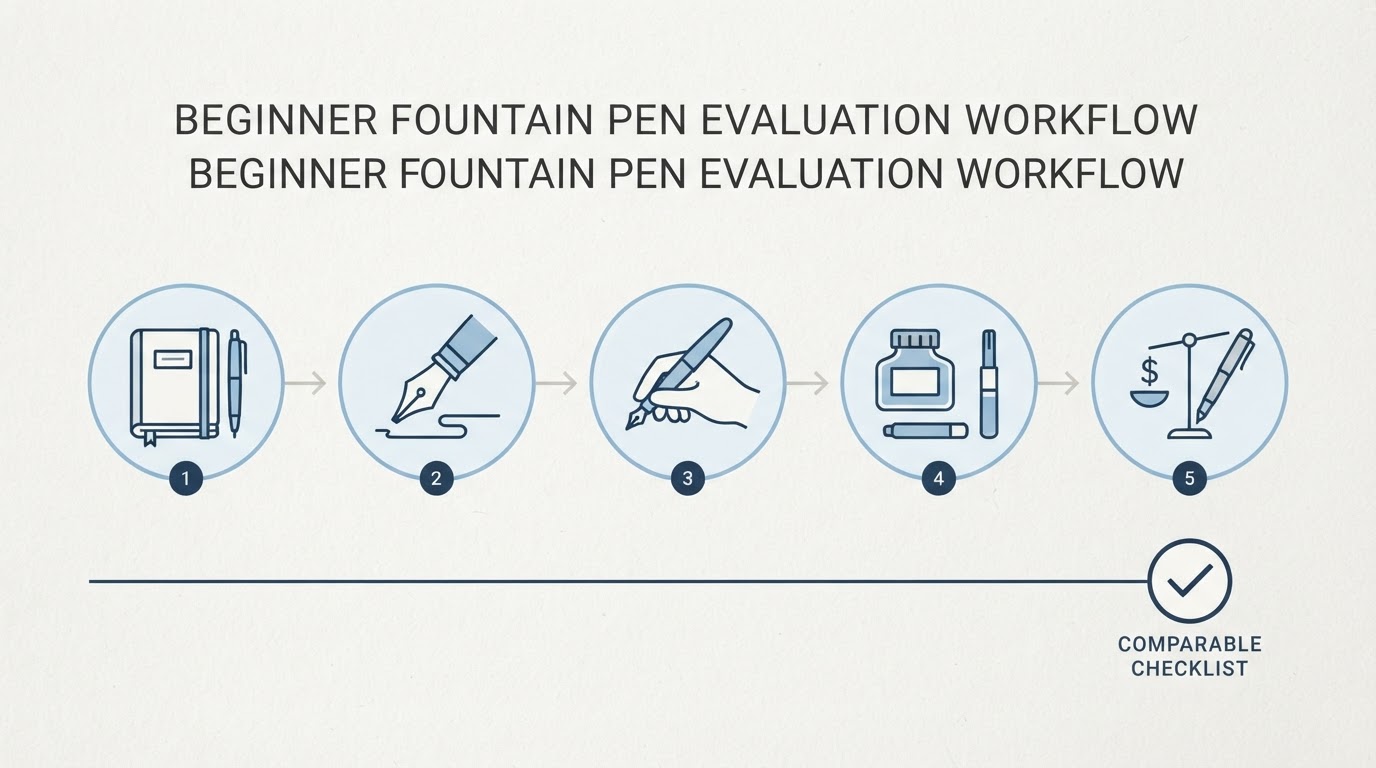
Beyond the LAMY family, the Safari is usually mentioned next to beginner pens such as the Pilot Kakuno and the TWSBI Eco. This review does not make claims about their specifications, and you should not take them from a roundup, including this one. If you are cross-shopping, compare every candidate on the same five points: filling system, available nib widths, body material and weight, grip shape and clip, and refill availability. Those five decide most of the day-to-day difference, and each maker publishes them on its own product page. That way you compare the pens on criteria you can verify rather than on a reviewer's preferences.
Who the LAMY Safari suits, and when to buy differently
The Safari is a strong fit if you want a first fountain pen that can survive a bag, if you like being able to choose a left-handed nib, if you prefer buying cartridges and skipping ink bottles, or if you want a design that has been refined through decades of special editions. It is also a reasonable pick if you want the look without the fountain-pen learning curve: the rollerball and ballpoint are the same family at lower listed prices.
Look elsewhere, or at a sibling, in a few cases. Choose the AL-star if you want more weight and a metal body. Choose a different model entirely if you want a piston filler or a converter included out of the box, since the Safari ships with a cartridge and the Z28 is separate. And if the shaped grip feels wrong in your hand, no amount of colour choice will fix that, so try one before committing.
Price, value and the buying checklist
On LAMY's Canadian shop at the time of writing, the Safari fountain pen was listed at CA$ 46, the rollerball at CA$ 38, the ballpoint at CA$ 34, the AL-star fountain pen at CA$ 65 and the Z28 converter at CA$ 12. Prices move by market and over time, so treat those figures as positioning rather than a quote: within LAMY's own range, the Safari sits below the AL-star, and the converter is a small add-on next to the pen itself. Over years of use, bottled ink with a converter can be cheaper per millilitre than cartridges, but only if you actually write enough to use the ink before it dries out.
Before you buy, work through four questions:
- Which nib width matches your handwriting? LAMY offers several widths plus a left-handed option, and the width matters more to daily comfort than any other single choice.
- Cartridges or bottled ink? Cartridges for simplicity, the Z28 converter if you want ink choice and lower long-run cost.
- Which version? Fountain pen for the full experience, rollerball or ballpoint if you want the design without the maintenance.
- Is the listing current? Check the nib width, the included cartridge, and the price on LAMY's own product page before ordering, because editions and prices change.
The verdict, stated plainly: the Safari is a sensible recommendation for a first fountain pen or an everyday knock-around pen, provided you accept cartridges or budget for the converter, and provided the shaped grip suits your hand. It is less compelling if you already know you want a metal-bodied pen or a piston filler, and in those cases the AL-star or a different design is the better spend.