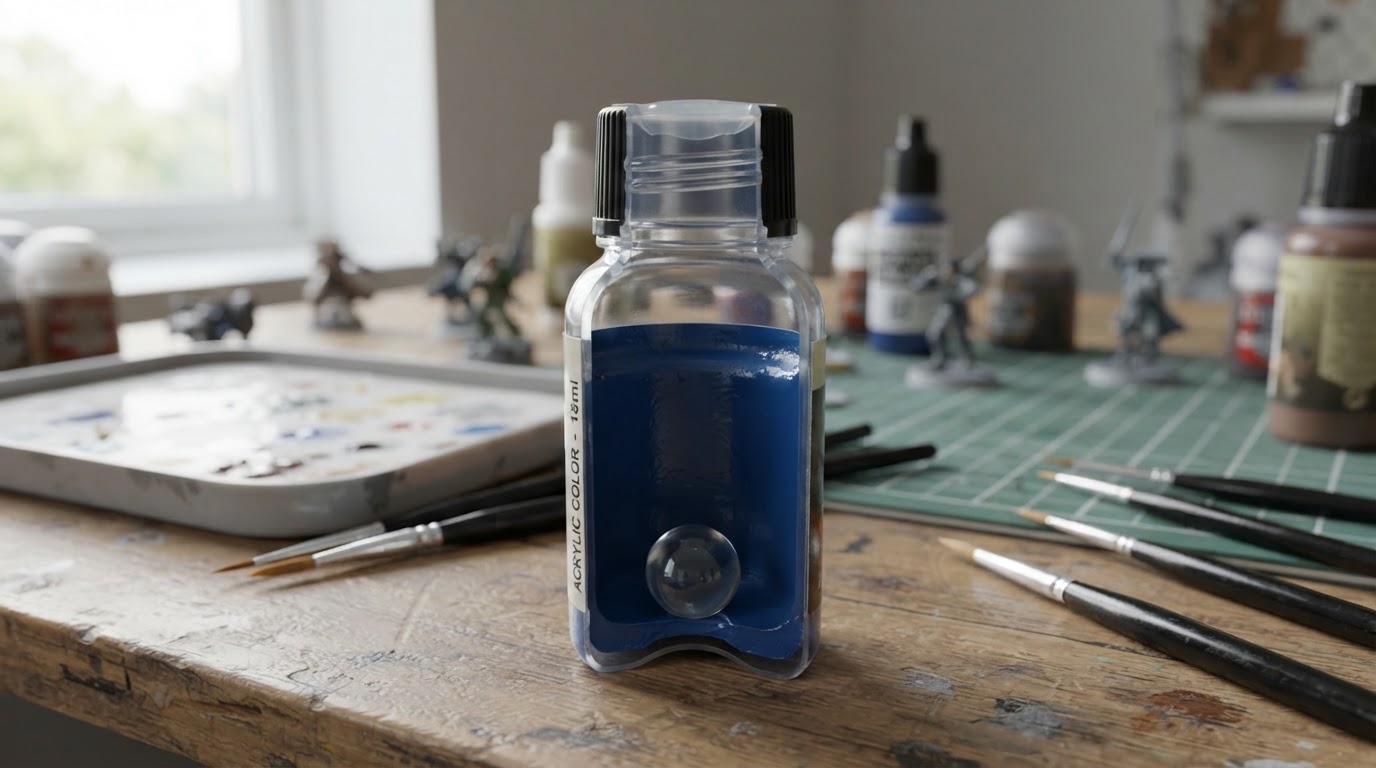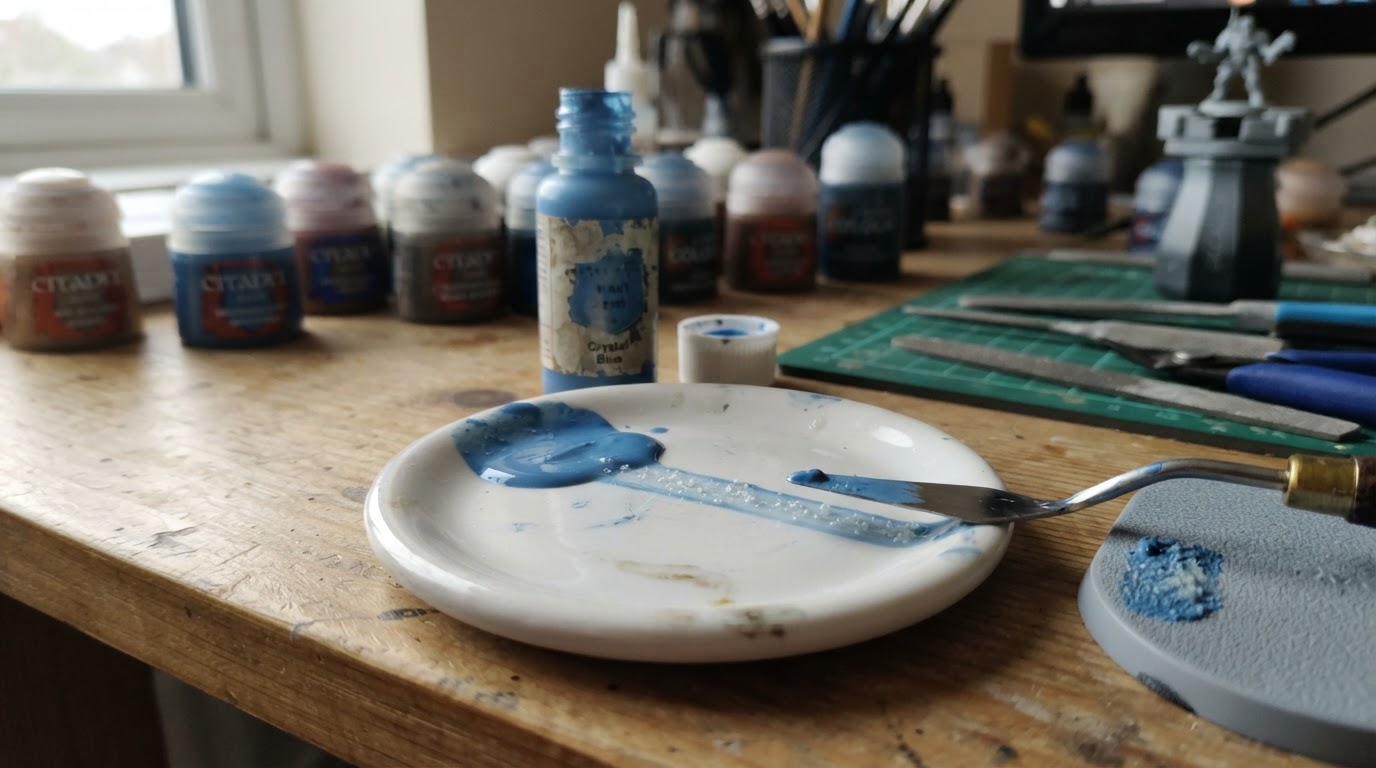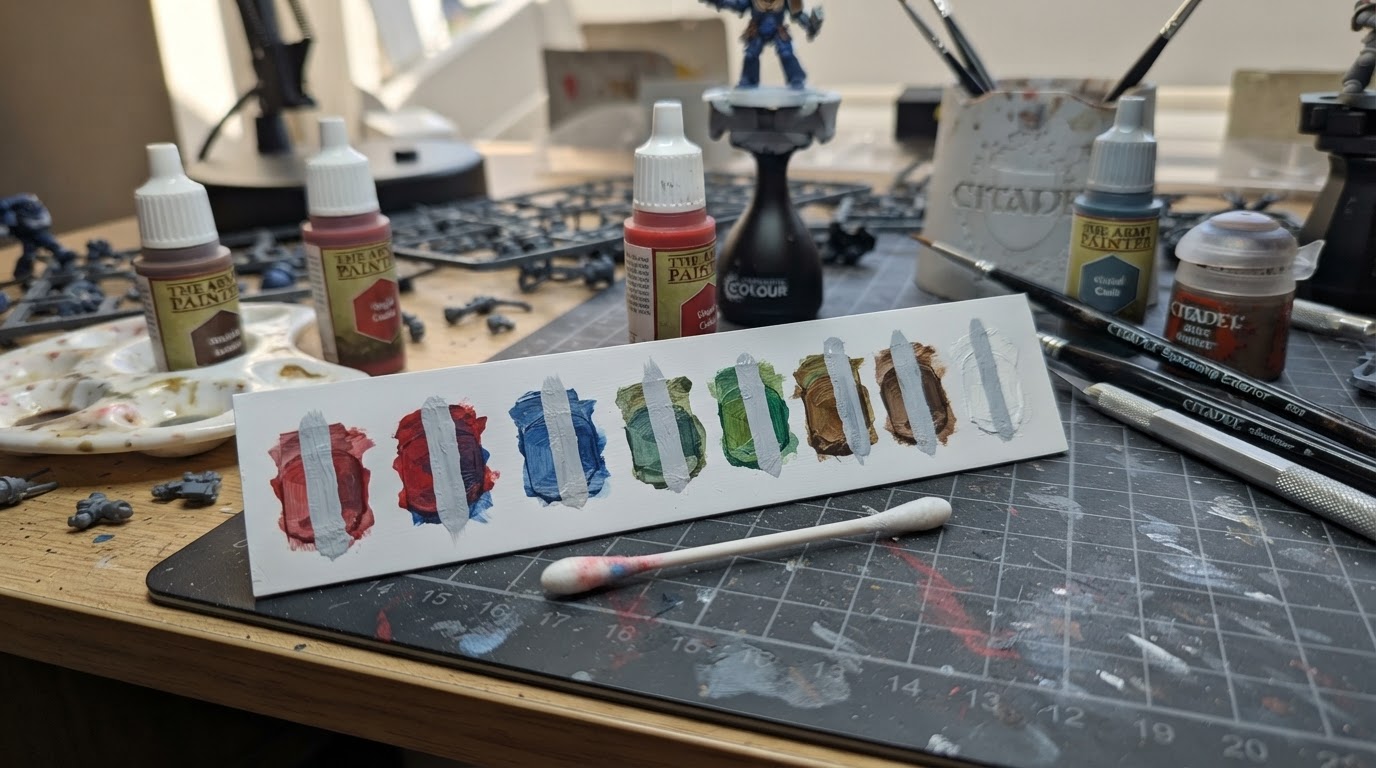
Liquid paint separating in the bottle does not establish a fault. Water-based hobby acrylics can separate in storage, and the reliable path is procedural: follow the exact mixing instructions for your product, then check a separate sample before adding water, thinner, or medium.
Mix First, Then Judge the Bottle
Separation in a sealed bottle is not proof that anything has gone wrong; it just means the contents are not uniform. Mixing comes first — not thinning, and not reaching for a tool the maker does not mention.
Mixing direction is product-specific, so read the exact label or current product page before changing anything about the bottle.
Check the Exact Label and Product Page
What the verified directions say
The Army Painter's current pages for Warpaints Fanatic: Matt White (WP3012P) and Warpaints Fanatic Effects: Disgusting Slime (WP3163P) describe the same handling approach: shake the bottle well for approximately 30 seconds, check a small squeeze of paint for consistency, and shake a few seconds more if it still separates.
Keep that instruction with those products; it is not a success rate for all paints or storage periods. Other ranges may differ, so the label in your hand outranks any general rule.
Mix, then check a separate sample
Work from a palette or clean spare surface rather than judging the paint from the bottle itself; a sample is repeatable and keeps anything you add out of the bottle.
The wet sample is your consistency check: look for the same color, body, and behavior across a few dips. If it changes between dips, the mixing is not finished; stay within the label's method.
Decision Table: What You Are Looking At
What you see | What the sample shows | What to do next |
|---|---|---|
A liquid layer above settled pigment that mixes back into smooth, even paint | The mix has returned to a usable, uniform state | Follow the label's mixing method, check a separate sample, then paint. |
Lumps, gel, or grit that survive the label's mixing procedure | The stated method has not restored an even mix | Stop and ask the maker; do not add solvents or improvised agitators. |
A deliberately glossy or textured effect finish | The product's stated effect, not a mixing result | Check that product's own directions; a glossy finish alone neither proves nor rules out a mixing issue. |
Sample Checks Before You Add Anything
A wet sample tells you about consistency, not about the dried result. Judge the dried intended effect only after the product's own drying guidance, since some finishes change as they cure.
A glossy intended finish does not prove the bottle has no mixing issue: intended shine and a sound mix are separate questions. Our guide to miniature paint drying glossy covers how to read a shiny result.
Appearance alone cannot confirm spoilage, contamination, or remaining shelf life; separation, a thin film, or a cloudy cast can come from ordinary storage.
When the Label's Procedure Is Not Enough
Try the label's procedure first. If persistent gel, grit, or rapid re-separation remains after that, stop and ask the maker; continuing to shake is not a diagnosis, and the appearance does not prove that more shaking will cure it.
Note the product name and any batch or lot information before contacting the maker, and keep the bottle closed until you have an answer. The same applies if the sample will not deliver the stated effect.
If the mixed paint is too thin to control on your palette, that is a separate problem — see wet palette paint too watery for the fixes.
What Not to Do
- Do not add water, thinner, or medium to the whole bottle before checking the label; its mixing direction may be all the paint needs.
- Do not import mixing instructions from other ranges or older product versions.
- Do not treat separation alone as a spoilage diagnosis or shelf-life verdict.
- Do not use household solvents, metal nuts, or improvised agitators; follow the maker's stated method for that product.
- Do not assume water restores paint that has already set or cured; separation and cured paint differ.
Next Steps Depend on the Sample
- If the labeled mix gives an even, repeatable sample, paint on; add anything only if a real problem remains.
- If gel, grit, or fast re-separation persists, stop and ask the maker with the batch details.
- If consistency is right but the finish looks wrong, judge it after the product's drying guidance before changing anything.
- If the paint is too thin to control, check your palette and brush habits before the bottle.