The Short Answer: What Can You Use Instead?
Purpose-made wet palette paper is the direct replacement for parchment paper. It is made to sit on a damp sponge and pass water through at a steady rate, so your acrylics stay workable without turning runny. If you cannot get it, plain uncoated kitchen paper can work as a fallback - but only after you test it. Anything designed to block moisture is out: wax paper, plastic film, and silicone-coated baking sheets. They seal the sponge instead of feeding it, and the paint on top dries just like it would on a bare lid.
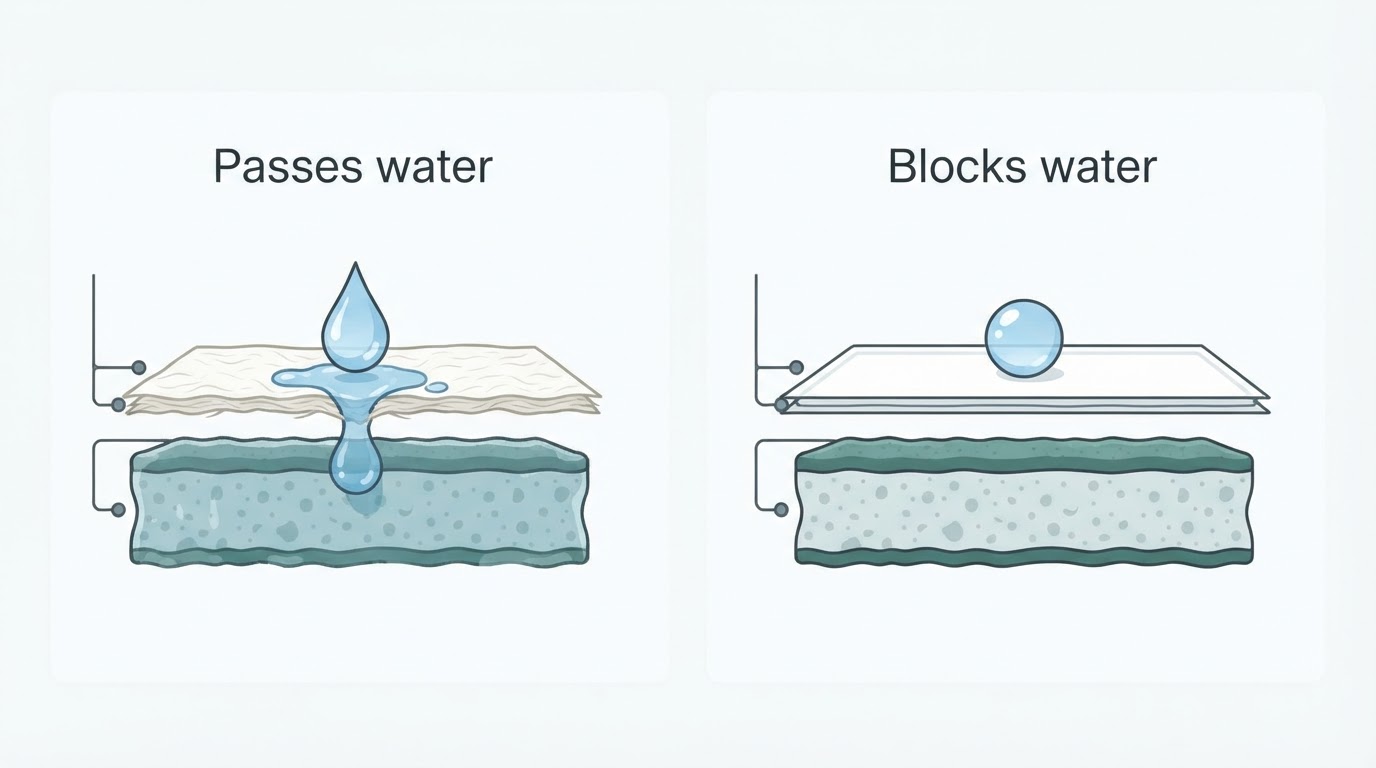
Water has to travel from the sponge, through the sheet, and into the paint film. If it cannot make that trip, the palette is just a fancy lid.
Why Wax Paper and Plastic Film Fail
Wax paper is paper with a paraffin wax coating, and that coating is the entire point of the product: it resists moisture and works as a barrier between food and surfaces. Reynolds Brands describes wax paper as suited to cold storage and as a barrier between food and surfaces, with parchment paper using a silicone coating instead. In a wet palette, that moisture resistance is a dealbreaker. The sponge stays wet, your paint sits on a dry sheet, and the paint skins over.
Plastic film and cling film are even simpler: there are no pores for water to pass through at all. Silicone-coated baking sheets behave the same way, because they are built to shed water and grease.
Parchment paper is a different case. It is coated with silicone rather than wax, and it is the sheet most painters reach for when the purpose-made paper runs out. Thickness and coating still vary between brands and regions, so even a parchment sheet has to pass the same test before you trust it with a full session of paint.
The Water-Transfer Test
Do this once for every paper you plan to use.
- Build a damp base. Put a sponge or folded towel in a shallow container and wet it, then squeeze out the excess so it is damp rather than flooded.
- Lay the sheet flat. Smooth it from the center outward so it makes full contact. Creases and air pockets leave dry islands under the paint.
- Drop water on top. Place a small drop of clean water on the paper, and a small dab of the paint you actually use next to it.
- Wait, then look. A sheet that passes water darkens evenly and the drop stops sitting on top. A sheet that blocks water leaves the drop beaded and glossy while the paper underneath stays pale.
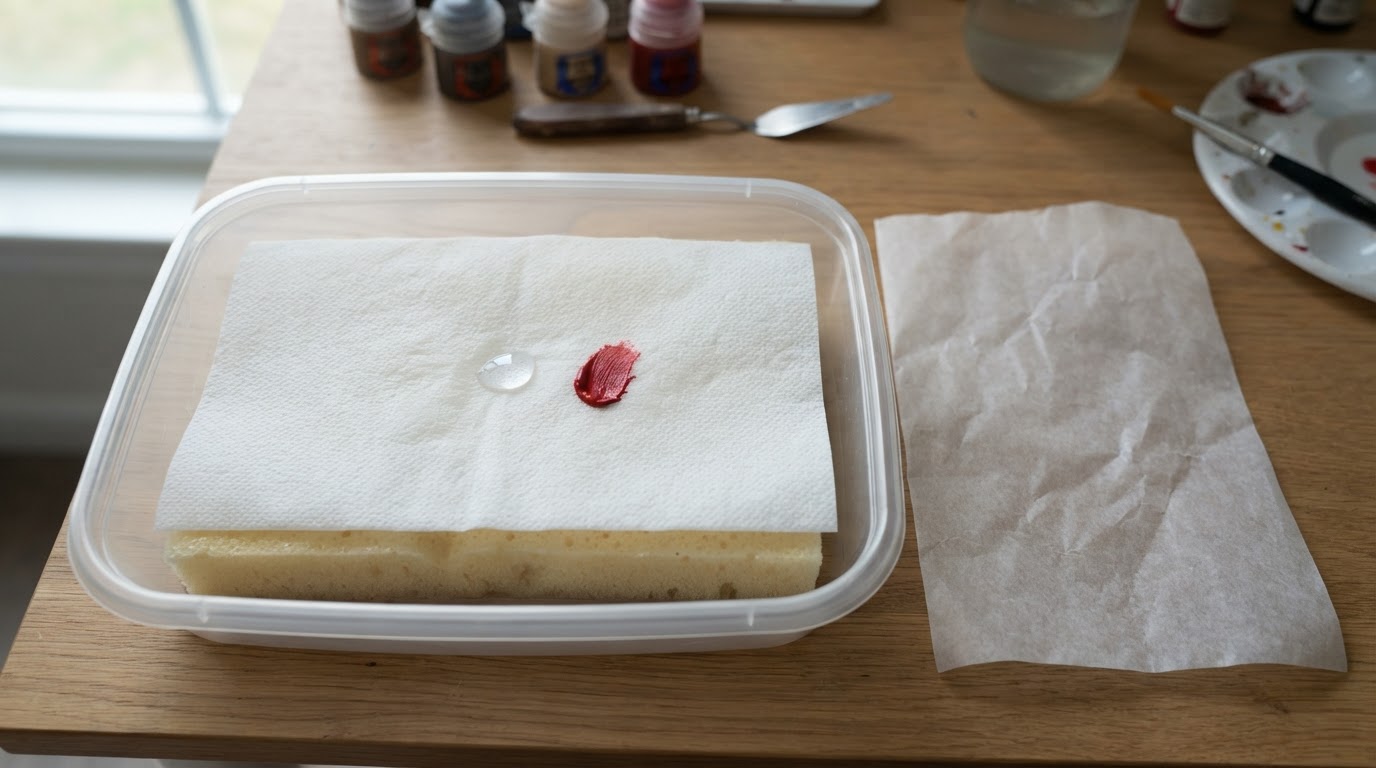
Pass means the whole sheet is damp, the drop spreads into it, and the paint stays soft at the edges for the session. Fail means the water beads or rolls, the paper stays dry, or the sheet tears, sheds fibers, or peels apart.
If it fails, do not try to rescue it by soaking the paper. A soaked sheet that still blocks water gives you a puddle under a dry lid, and the paint behaves exactly the same way.
Substitute Decision Table
Material | Does water pass through? | For water-based acrylics | What to watch for |
|---|---|---|---|
Purpose-made wet palette paper | Yes, by design | Best choice | Replace it when it is stained or breaking down |
Plain uncoated kitchen paper | Sometimes - test it | Only if the test passes | Fibers, tearing, and soaking up too much water |
Parchment paper | Test it | Usually workable, but check it | Curling at the edges; coatings vary by brand |
Wax paper | No | Not suitable | The paraffin coating blocks moisture |
Plastic film or cling film | No | Not suitable | Seals the sponge completely |
Silicone-coated baking sheets | No | Not suitable | Made to resist water and grease |
Setting Up the Palette With a Substitute
- Clean the container and sponge first. Old paint and dirty water are what make a palette turn.
- Keep it damp, not flooded. The sponge should be wet through with no standing water above it.
- Use one flat sheet. Cut it a little smaller than the tray so it does not curl over the edge.
- Load paint in small dabs. Spread them around the edge and leave the center clear for mixing.
- Close it between sessions. The lid holds the humidity; the sheet holds the paint.
- Recheck every time you open it. If the surface looks dry, lift the sheet and rewet the sponge instead of pouring water on top.
The setup is complete when the paper looks evenly damp, feels cool, and holds paint that stays soft at the edges through a normal painting session.
Limits, Paint Types, and Hygiene
A wet palette is a tool for water-based acrylics. Solvent-based and oil paints do not belong on one: they do not need the water, and some of them will damage the sheet and sponge. Very thin glazes can also pull too much water, and some papers release fibers or dye into the paint. That is one more reason to test first and watch the paint closely on the first run.
Do not add household additives to stretch the setup. Detergent, glycerin, alcohol, bleach, and homemade preservative mixes are not part of a safe palette routine.
Mold is the main long-term risk. If you see or smell mold, throw out the sheet, wash the container and sponge thoroughly, and start fresh. Change the paper regularly, keep the water clean, and do not leave a closed palette sitting for days if you can avoid it. No single sheet is a universal fix, and no household paper is automatically safe for paint contact.
If you would rather use a purpose-built setup instead of testing substitute paper, see the separate wet palettes for miniature painting guide. This page is only about what to use when parchment paper is missing.
FAQ
Can I use paper towel instead of parchment paper on a wet palette?
Sometimes, after testing. Plain uncoated paper towel can pass water, but it tears easily, sheds fibers, and soaks up a lot of the moisture. Treat it as a same-day fix rather than a long-term sheet, change it every session, and check that it has not broken down into the paint.
Does wax paper work on a wet palette?
No. Wax paper is coated with paraffin wax that is designed to resist moisture, so water from the sponge cannot pass through it into the paint. Reynolds Brands explains that the wax coating makes wax paper a barrier for cold storage and food protection, which is the opposite of what a wet palette needs.
How do I know if a substitute actually transfers water?
Run the water-transfer test. Put a drop of water on the sheet over a damp sponge and wait. If the drop spreads and the paper darkens evenly, water is moving through. If the drop beads up, rolls around, or the paper stays dry and glossy, the sheet is acting as a lid. Do not use it, no matter how much it looks like parchment.