All Posts
Browse all blog posts
Miniature Painting Handles: Choose a Mount That Fits Your Model
Compare a putty-and-cap painting handle, a DIY 3D-printed design, and a cork holder to pick the mount that fits your base, workflow, and budget.
Miniature Paint Separating in the Bottle? Mix Before You Add Anything
Liquid paint separating in the bottle does not prove a fault. Follow the label's mixing directions and check a separate sample before adding anything.
Miniature Paint Drying Glossy? Check the Paint Before Adding Varnish
Miniature paint drying glossy? Check the exact paint's intended finish and whether it is really dry, then varnish only if you want a matte finish.
Wet Palette Paint Too Watery? Check the Water, Paper and Brush
Watery acrylic paint on a wet palette? Check the water line, blot the brush, spot over-thinning, and test a fresh sample on scrap before blaming the paint.
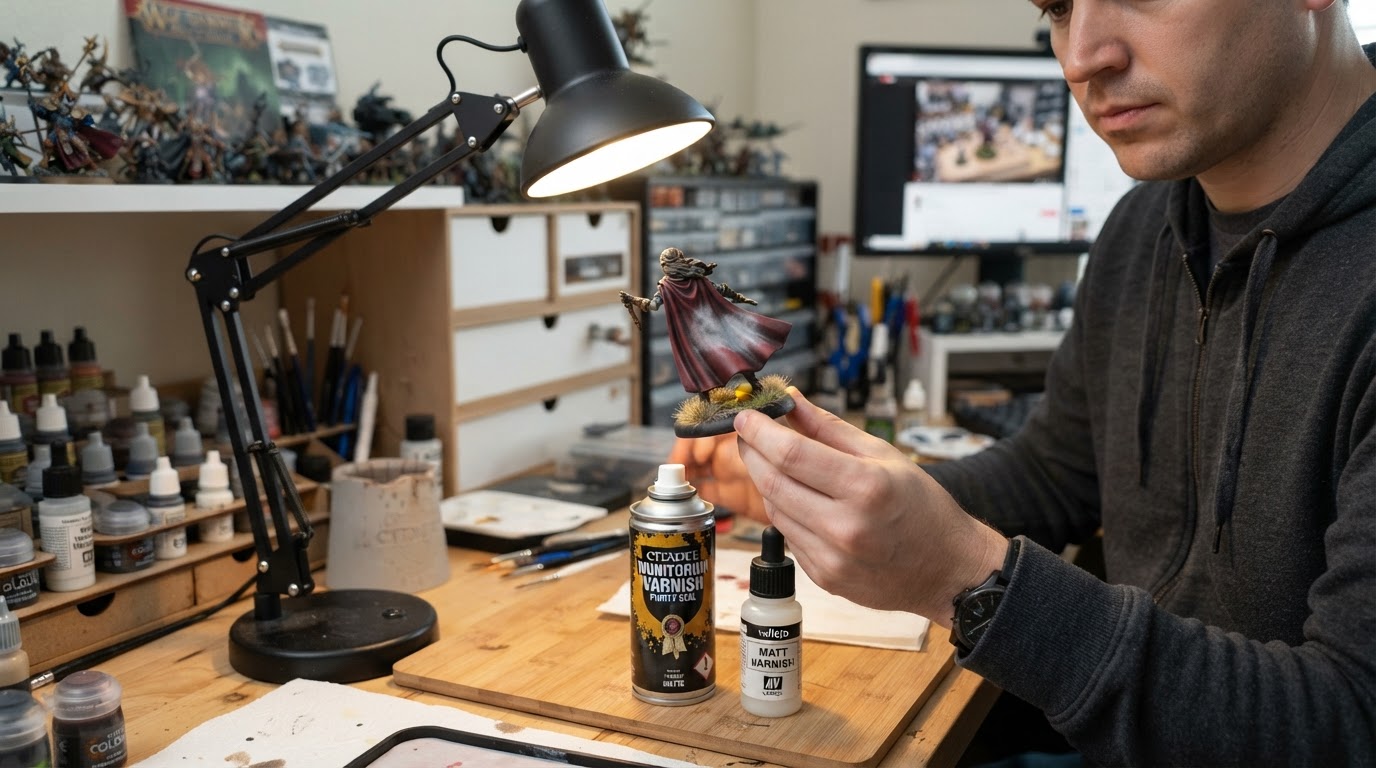
Varnish Frosting on Miniatures: Check the Finish Before You Recoat
Cloudy varnish on a miniature? Stop spraying, check drying and surface texture, then assess a compatible test recoat without risking the painted detail.
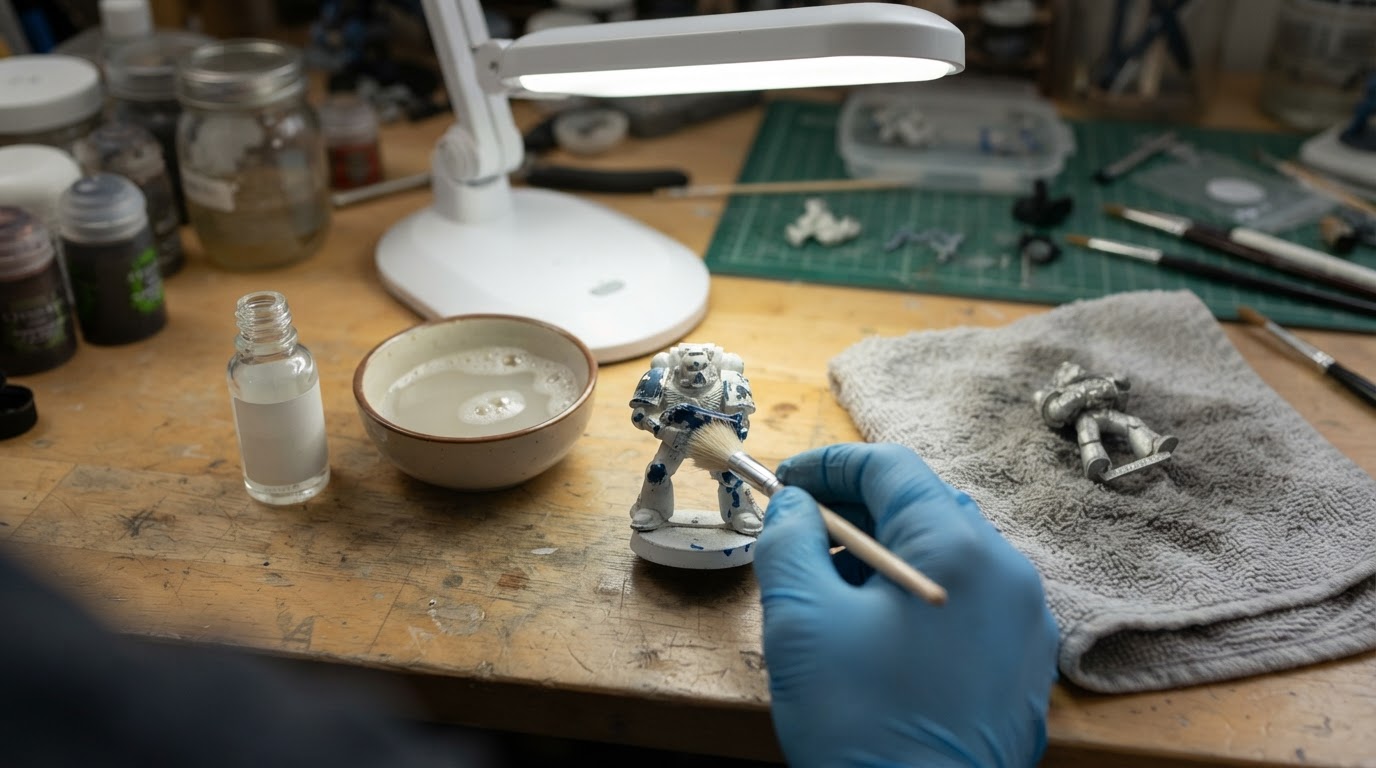
How to Remove Paint From Metal Warhammer Miniatures Safely
Remove paint from a metal Warhammer miniature by checking every material, testing a compatible remover and following its safety label before repainting.
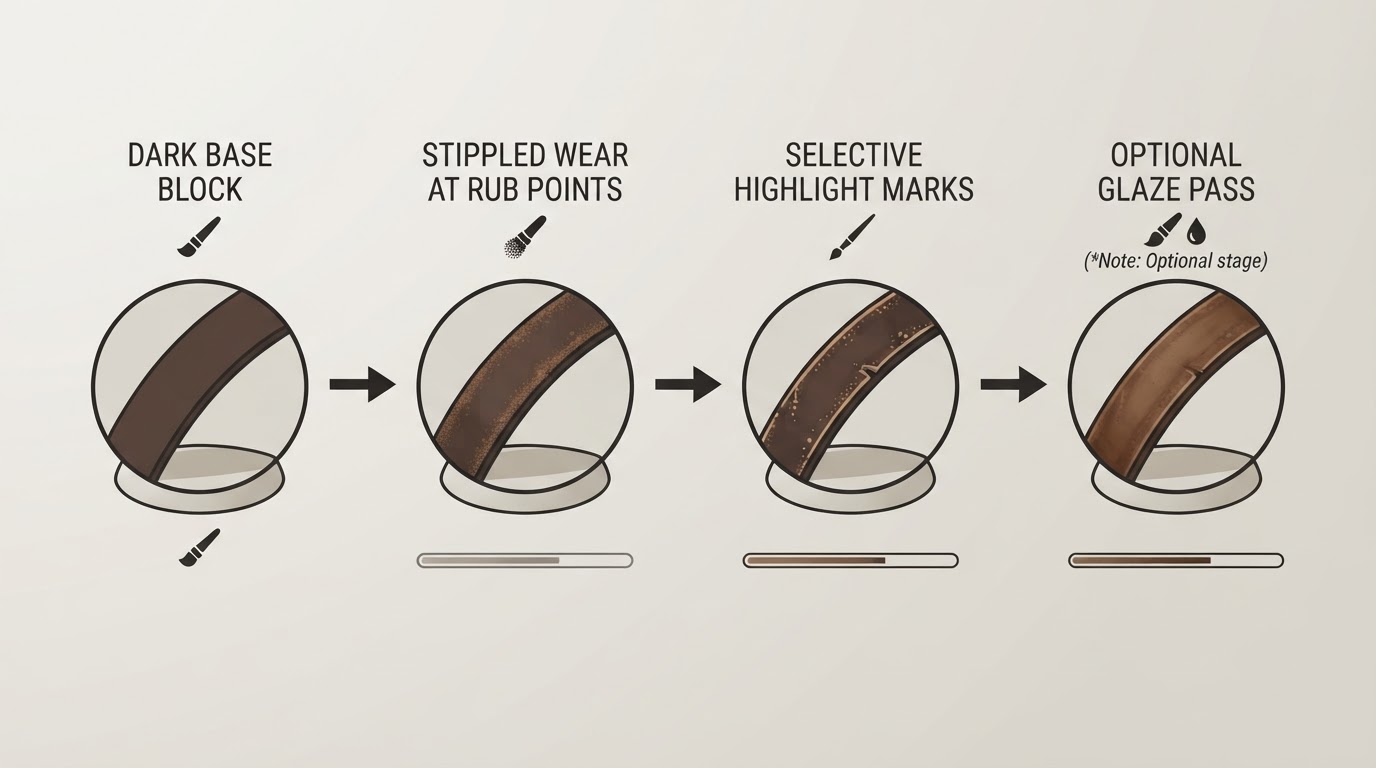
How to Paint Worn Leather on Miniatures
Paint worn leather on miniatures with a dark base, stippled scuffs at contact points, selective highlights and an optional glaze.
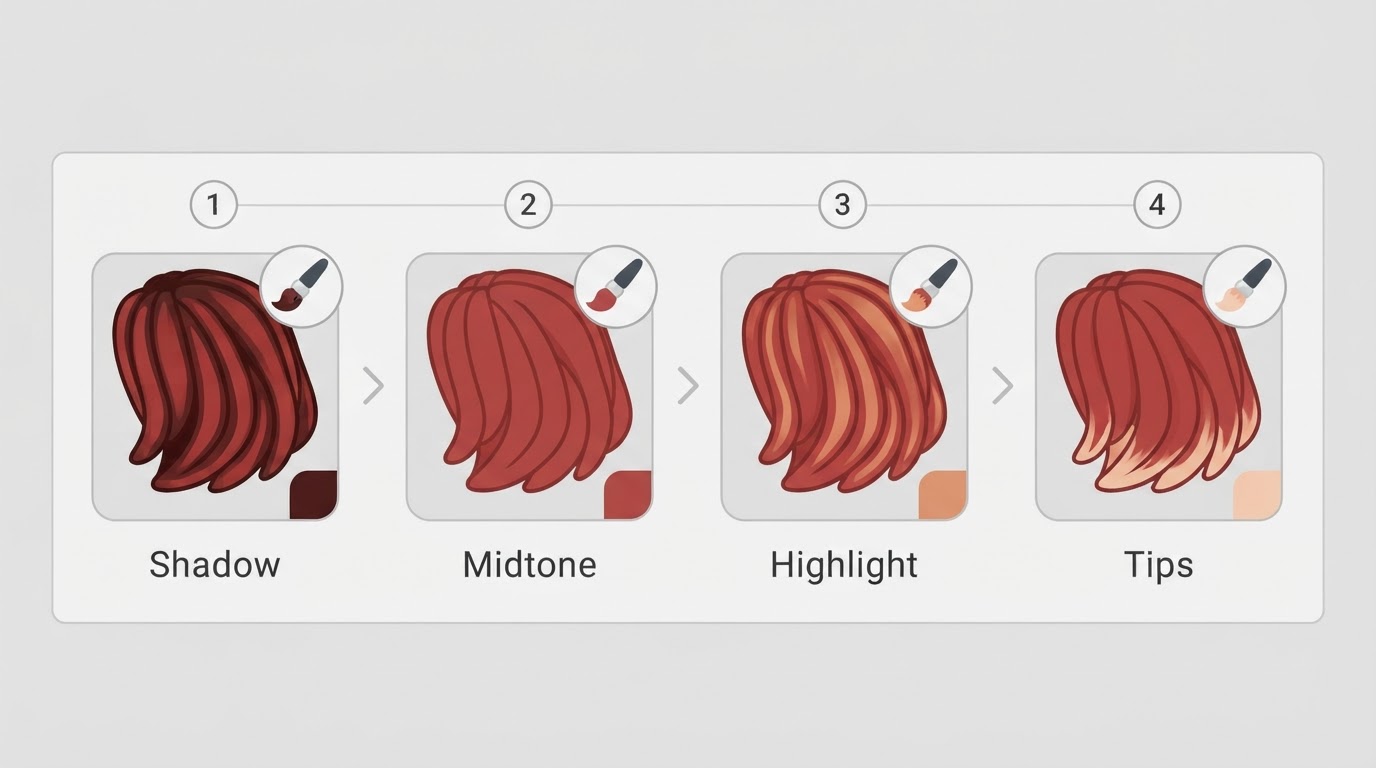
How to Paint Red Hair on a Miniature Without Flat Orange
Paint red hair on a miniature without flat orange: anchor a dark red-brown shadow, keep the midtone muted, and place warm highlights only on raised strand tips. Includes ginger, auburn and fantasy red placement plus a fix matrix.
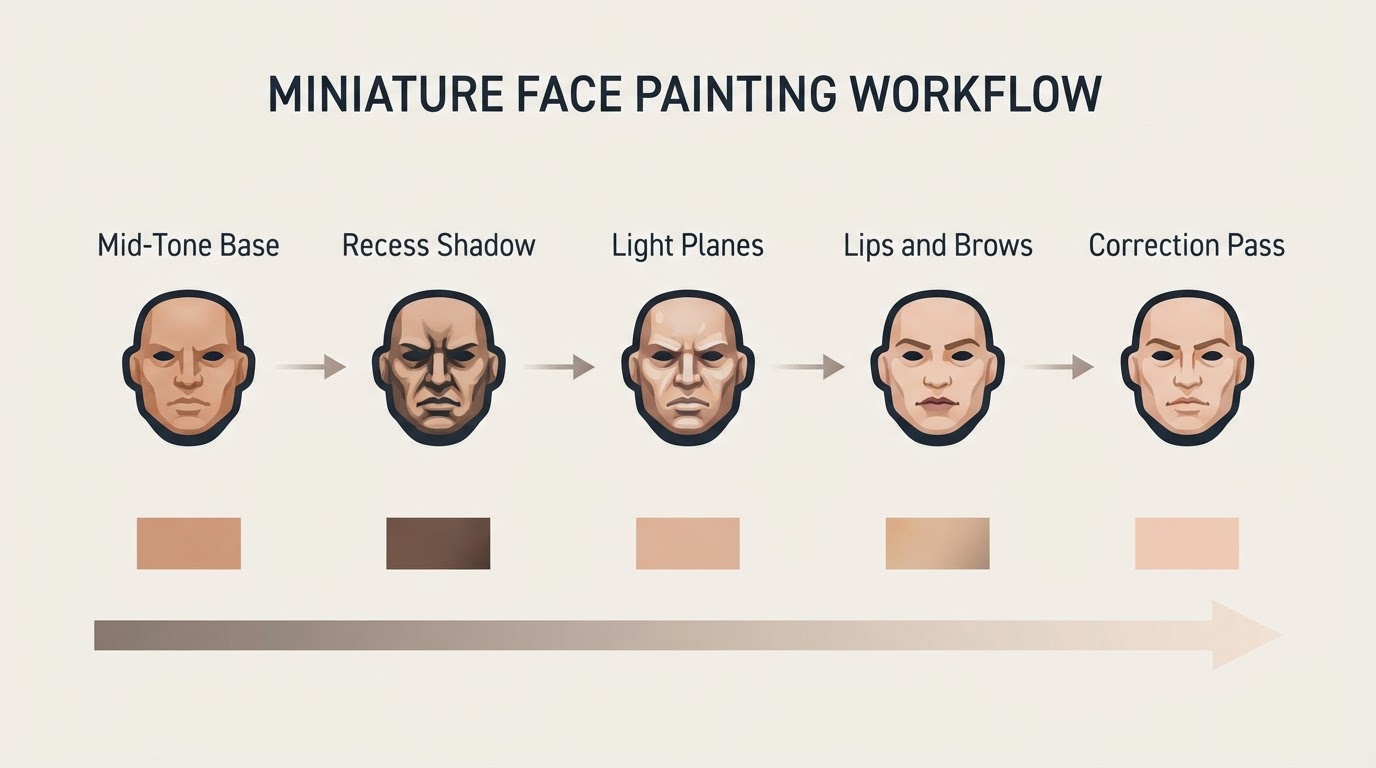
How to Paint Miniature Faces at 28–32 mm Scale
A five-step sequence for painting miniature faces at 28–32 mm scale: mid-tone base, controlled shadows, stepped light planes, lips and brows, and a short correction pass.