Stop spraying first, then read the label
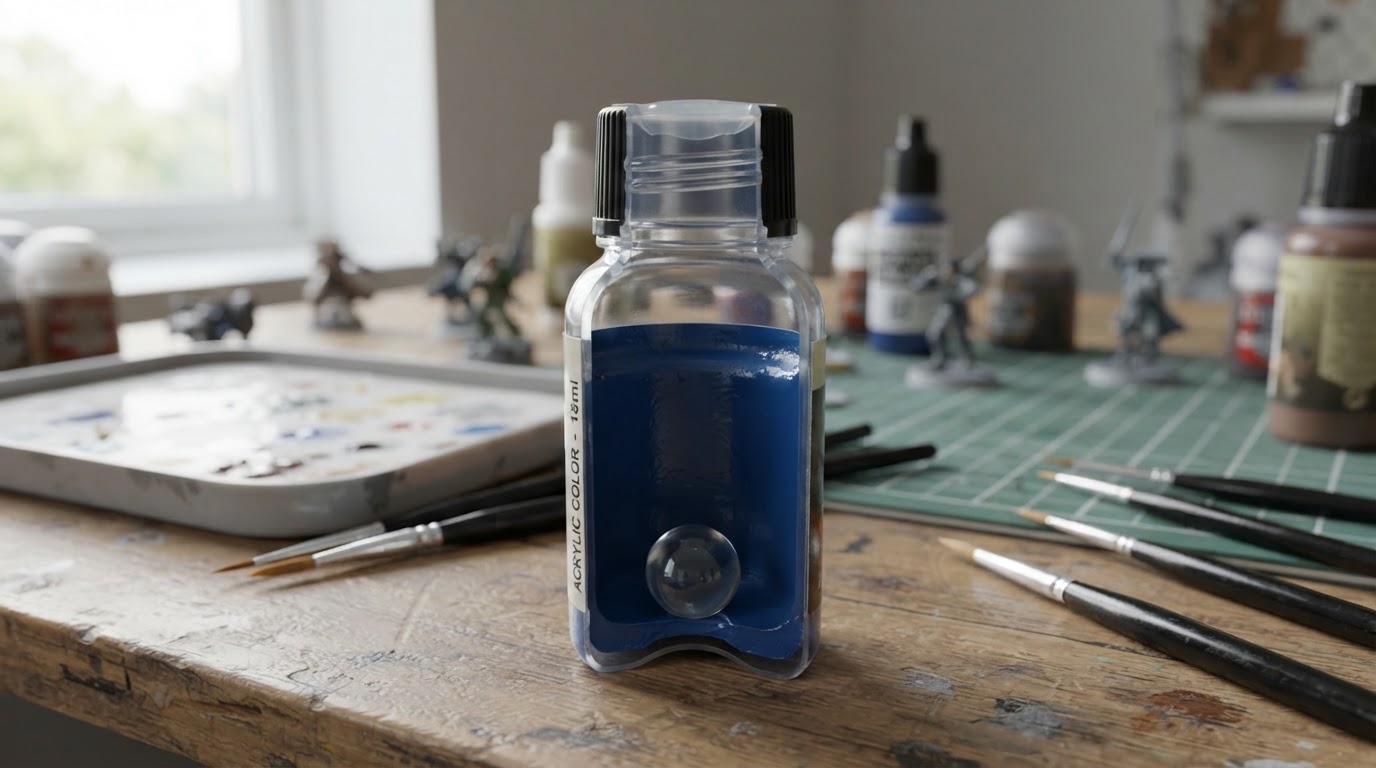
More varnish only adds a layer to a film that has not finished curing. Let the product's full labeled drying time pass, then wait longer: a wet coat can look cloudy and clear as it cures. Identify what you used — aerosol, brush-on or airbrush varnish — and read the label. Then inspect the surface under a bright light, tilting the model so the light rakes across it at a low angle.
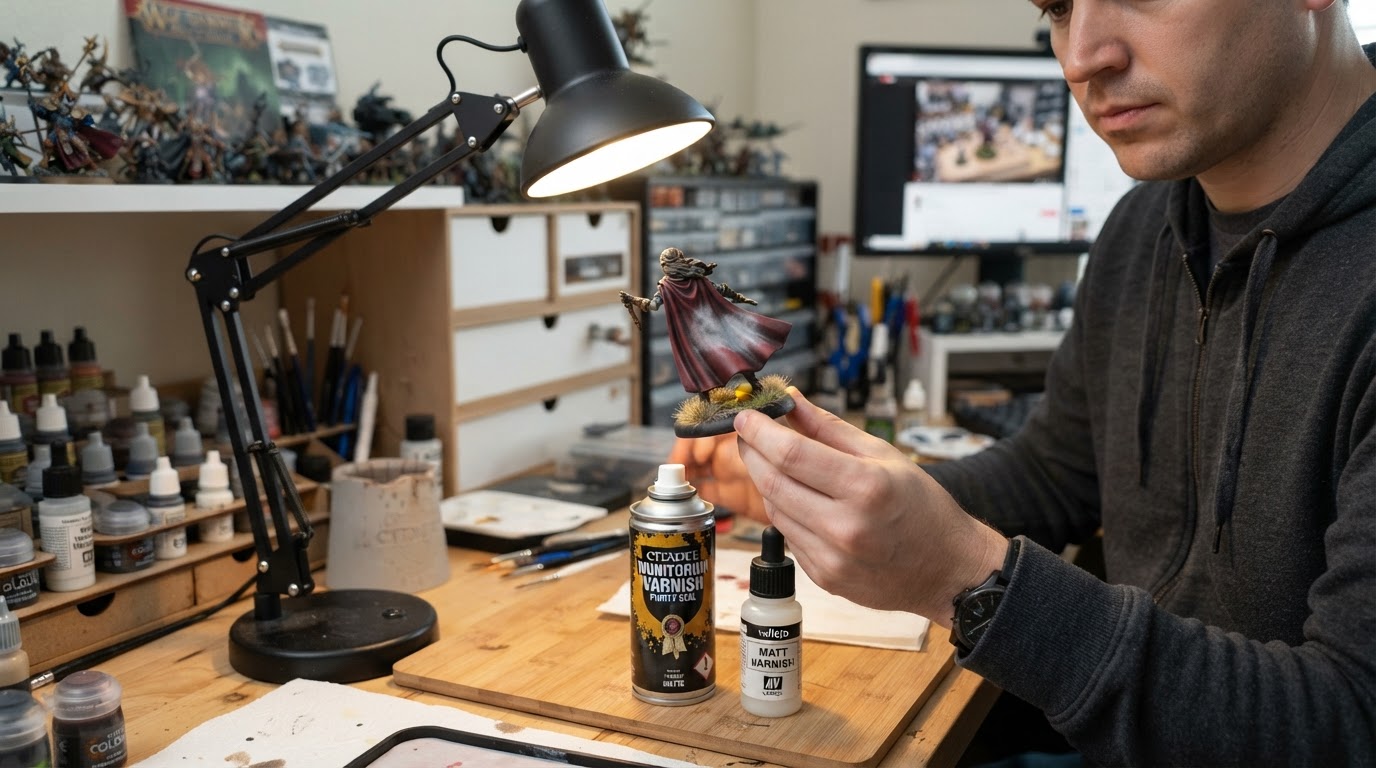
Smooth haze or gritty overspray?
They can look similar, but they point in different directions.
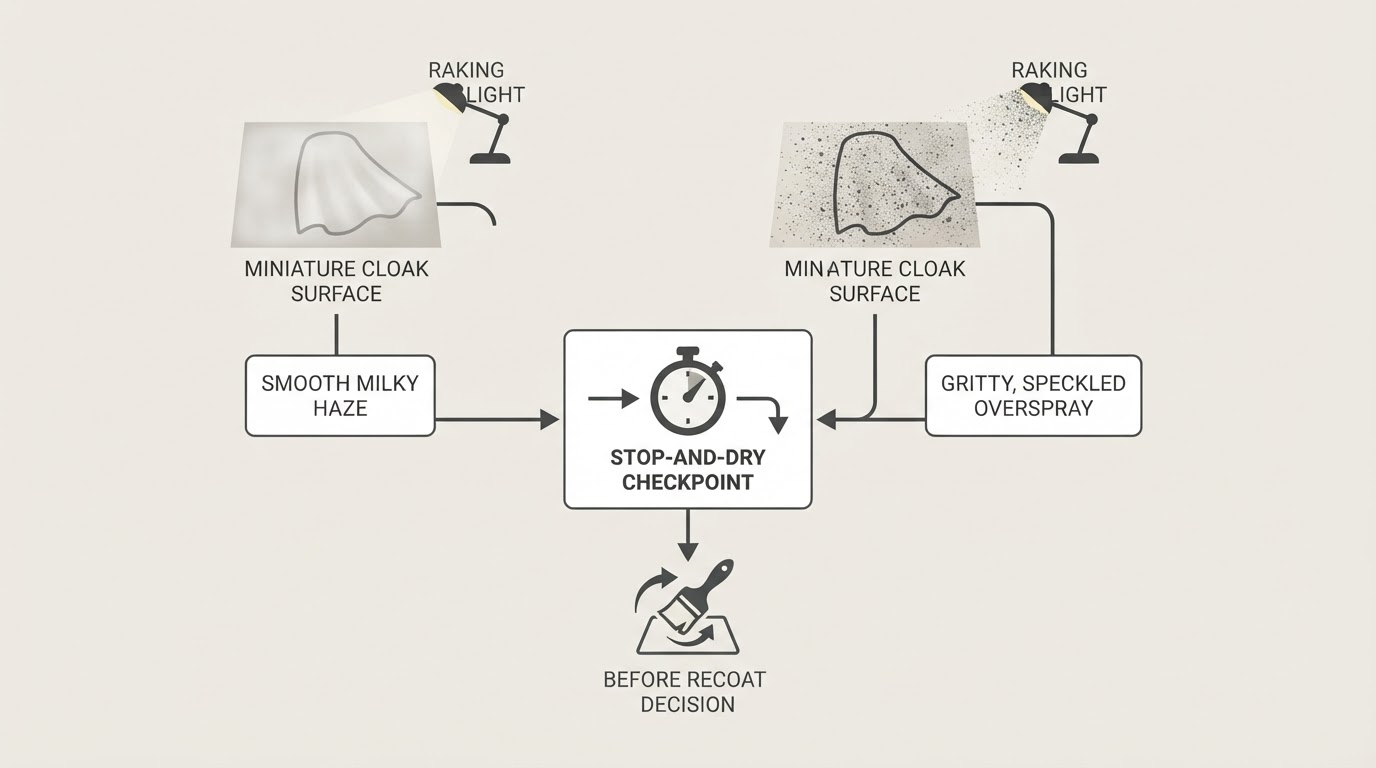
What you see | What it suggests | Cautious next step |
|---|---|---|
Smooth, uniform milky or chalky haze, often worst in recesses | Trapped moisture or a heavy coat that dried unevenly — a possibility, not proof | Move it to a warm, dry spot, never direct heat, for several hours or overnight, then judge again |
Gritty, speckled or dusty texture | Spray that began drying before it landed, or an uneven application | Leave the painted detail alone and note the distance and technique for the next model |
Cloudiness appearing as the coat dries in humid or cold conditions | Conditions rather than skill: humidity or cold slowing the cure | Wait for a drier, warmer day before any further varnish work |
Still hazy after full drying in good conditions | The film has already cured cloudy | A thin gloss or satin coat is a manufacturer-described option, but test it on an expendable model first |
Humidity, a heavy coat, cold and poor mixing can all leave a hazy film, and more than one can be involved. The Army Painter's own troubleshooting on cloudy varnish describes both a white or grey haze and a dusty or powdery film, and treats uneven application — misting or holding the can too far away — as a separate cause of a speckled surface.
What can cause a cloudy film
None of these can be confirmed from the surface alone.
The Army Painter lists high humidity as the biggest culprit, because moisture can become trapped as the film dries. Thick coats hold moisture and cure unevenly, most visibly in recesses, and cold air slows the cure, raising the odds of condensation. Weak mixing is another suspect: varnish components separate in storage and must be mixed before application, or the coat can dry unevenly. Applying varnish before the paint is fully dry can also change how the film looks; see how long miniature paint takes to dry.
Mixing is product-dependent, not a universal rule. Liquitex's guide to varnishing acrylics tells brush-on users to stir gently to avoid bubbles, and spray users to shake the can well. It also warns against re-passing an area: dragging partially dry resin into wet varnish dries cloudy. Its matte and satin finishes are limited to one or two thin coats, with a gloss pre-layer if you want more. Those are product instructions, not universal numbers.
The recoat option, without the promises
The Army Painter's first suggestion is a thin coat of gloss or satin varnish over the cloudy areas; it says this often re-wets the layer so trapped moisture can escape. If the haze persists, it suggests letting the model sit in a warm, dry space overnight, then applying a very light, controlled gloss coat; sometimes cloudiness fades on its own once moisture evaporates. Treat both as product-dependent options, not a guaranteed restoration, and never as a reason to heat the model or aerosol.
Test any recoat on an expendable model first: a disposable figure tells you how your product behaves before a model you care about is on the line. If the haze does not clear, accepting the finish and repainting later is a real option; the same source acknowledges that removing only the varnish without affecting the paint underneath is difficult. If you do start over, see our guide to painting D&D miniatures.
What not to do
Skip the folk remedies. Oils, solvents, sanding or abrading painted detail, and heating an aerosol add risk to the paint you are trying to save, and none reliably clears a frosted film.
Keep it from happening next time
Wait until the paint is fully dry before varnishing, work in low humidity and avoid cold conditions, and build the coat in light passes rather than one heavy application. Shake or stir according to your product's label. Give each coat its full drying time, and keep a test model handy.